

Why Minnesota? Lessons for Today from Minnesota's Labor Movement.
3,000 Federal Agents vs. 170 Years of Organizational Infrastructure
The first recorded strike in Minnesota happened in 1854 — the same year Anthony Burns was marched through Boston in chains, as I wrote about yesterday, the case that ended fugitive renditions from Massachusetts.
Journeymen tailors in St. Paul walked off for higher pay. They didn’t win. But they established something: the principle that workers in this territory would organize.
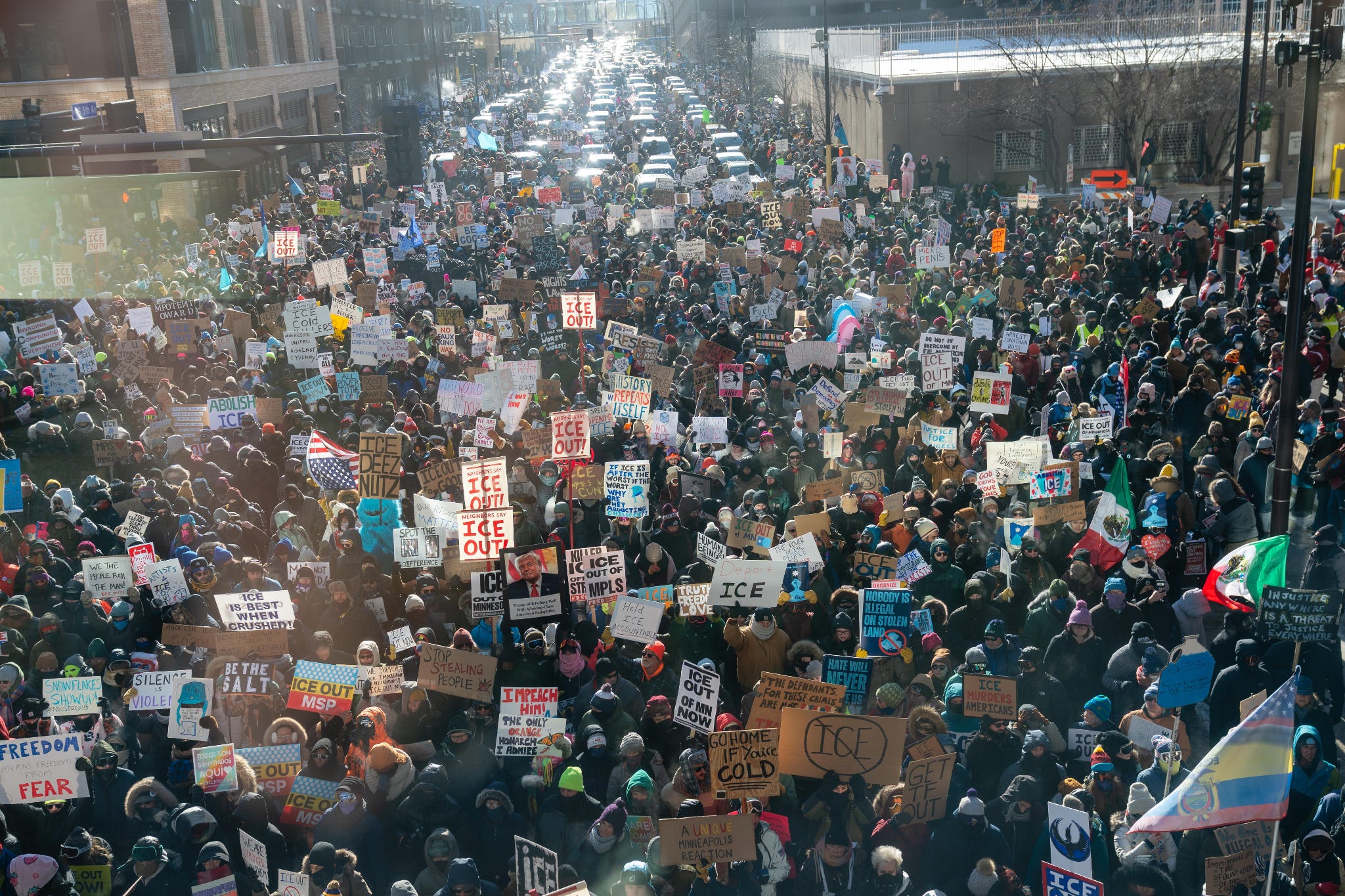
One hundred seventy-two years later, tens of thousands walked off again. The “Day of Truth and Freedom” shut down over 700 businesses, put 100 clergy in jail at the airport, and forced the federal government to pull its commander from Minneapolis.
Everyone asks: why Minnesota? Why did Trump send thousands of CBP and Ice agents here? Why did the resistance coalesce here?
The answer isn’t Tim Walz. It isn’t George Floyd, though that accelerated things. It isn’t some unique Minnesota temperament.
The answer is 170 years of organizational infrastructure — accumulated, adapted, and activated.
The Finnish Laboratory
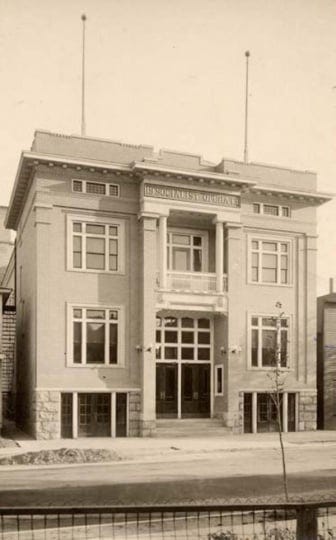
Before Minneapolis had The Garage, the Iron Range had the Socialist Opera House.
Finnish immigrants arriving in northern Minnesota in the early 1900s didn’t just bring their labor. They brought an organizational model: socialist politics, cooperative economics, and industrial unionism, fused into a comprehensive institutional network.
The Finnish Socialist Federation was founded in Hibbing, Minnesota in 1906 with 2,500 members. By 1912, it had grown to 13,667 — the largest foreign-language federation in the Socialist Party of America. By one estimate, a third of Finns on the Iron Range were socialists.
They built halls. Virginia’s Socialist Opera House, opened in 1913, hosted dances and theatrical performances upstairs while strikes were planned downstairs. These weren’t just meeting spaces — they were community infrastructure, the same buildings serving cultural preservation and labor militancy.
They built schools. Work People’s College in Duluth trained organizers in Marxist economics and cooperative management. After the 1913-14 factional split, when thousands of members left for the IWW, the college became the Wobblies’ educational institution — eventually publishing Industrialisti, the only daily newspaper the IWW ever produced. It ran from 1917 to 1975.
They built tactics. The 1907 Mesabi Range strike — 10,000 to 16,000 miners walking out — pioneered multilingual organizing, with each local divided into Italian, Slavic, and Finnish sections headed by organizers of corresponding nationality. The 1916-1917 lumber strike introduced flying squads spreading word of the strike to logging camps throughout the region.
This infrastructure didn’t disappear when the strikes ended. It fed into networks that would prove decisive two decades later.
The Garage
In May 1934, Minneapolis was the most anti-union city in America.
The Citizens Alliance — the employer association that had controlled the city since 1903 — had broken virtually every major strike for thirty years. They threatened banks to refuse loans to businesses recognizing unions. They maintained corps of undercover informers. They organized paramilitary militia. They controlled local press messaging.
Into this environment came organizers forged in the same radical networks. Vincent Dunne had encountered the IWW in Montana lumber camps in 1905; his family moved to Minneapolis in 1908. Carl Skoglund, a Swedish immigrant, had co-edited Allarm, the IWW’s Scandinavian-language newspaper, from 1916 to 1918 — the same years northern Minnesota was on fire. They’d joined the Communist Party together, been expelled together in 1928 for Trotskyism, and spent years building a base in Teamsters Local 574, which had no more than seventy-five members before their organizing drive. By the time the strikes began, they had 6,000.
For the strikes that followed, they constructed an organizational apparatus unprecedented in American labor history.
Strike headquarters — “The Garage” — occupied a converted garage approximately 400 feet wide and a block long. A stage with loudspeaker system enabled real-time dispatching of pickets and mass meetings.
The commissary department employed thirty-five personnel, with crews of 120 preparing food day and night. At peak, 10,000 people ate at headquarters in a single day. A medical station with two doctors and three nurses operated continuously. Twelve mechanics maintained a fleet of over 100 trucks and cars.
Five telephones served as the nerve center, supplemented by shortwave radio monitoring police frequencies, coded telephone calls when lines were tapped, and motorcycle couriers for special liaison. Guards policed doors while watchmen with tommy guns occupied the roof.
The flying squadron system kept no fewer than 500 strikers at headquarters day or night. Dispatchers received messages from picket captains — required to call in every ten minutes — and deployed cruising squads wherever needed:
“Truck attempting to move load of produce from Berman Fruit, under police convoy. Have only ten pickets, send help.”
The tactic had a name before 1934. In the 1916-17 lumber strike, IWW organizers had dispatched “flying squads” to spread word of the strike to logging camps throughout northern Minnesota. The terminology — and the organizational logic — carried forward.
The Women’s Auxiliary, led by Marvel Dunne, organized kitchen operations, hospital staffing, and counter-propaganda. When police beat women unconscious on May 19, the Auxiliary organized a march of 500 women down Nicollet Avenue to the Mayor’s office. Later, 700 women marched demanding withdrawal of special deputies.
The Organizer, edited by James P. Cannon and published daily, was the first daily strike bulletin in American labor history. Circulation went from nothing to 10,000 in two days. Cannon later claimed: “Without The Organizer the strike would not have been won.“
When the governor declared martial law and 1,000 National Guardsmen arrested sixty-eight leaders at 4 a.m., the strike didn’t collapse. Vincent’s brother Grant and Farrell Dobbs escaped the dragnet and established “curb headquarters” — twenty distributed command points, mainly in friendly filling stations, which cruising squads could enter and leave without attracting attention.
Among those jailed: a young organizer named Arvo Halberg — later known as Gus Hall. His parents were Finnish immigrants, card-carrying IWW members from the Iron Range. His father had been blacklisted from the mines for joining an IWW strike. The networks connected.
The federal government spent between $40,000 and $100,000 to return one man to slavery in Boston.
The Citizens Alliance spent more than that trying to break one strike in Minneapolis.
They failed.
The Accumulation
The 1934 victory transformed the organizational capacity of the entire region. Farrell Dobbs architected the Midwest over-the-road campaign that brought a quarter million drivers into the Teamsters across eleven states.
The infrastructure persisted through defeats. The 1985-1986 Hormel P-9 strike failed — Governor Perpich deployed the Guard to protect scabs. But P-9 “came to symbolize democracy and membership participation... a form of ‘horizontal’ solidarity that threatened the vertical, bureaucratic hold that international unions exercised over their locals.”
The distinction matters: vertical solidarity means workers follow union leadership directives from above; horizontal solidarity means workers coordinate directly with each other and with other locals, building power from the base. P-9’s model threatened international union control—which is why the UFCW eventually put the local in trusteeship. But the model survived.
That horizontal solidarity would return.
The 2006 “Day Without Immigrants” brought 40,000 marchers to St. Paul — the largest rally in Minnesota history. Worker centers like Centro de Trabajadores Unidos en Lucha (CTUL) organized outside traditional union structures, recovering $6.3 million in stolen wages and transforming the Twin Cities janitorial industry.
Then came George Floyd.
The protests of 2020 didn’t create Minneapolis’s organizational infrastructure. But they stress-tested it, expanded it, and trained tens of thousands in coordination under pressure. The Signal networks that would coordinate the 2026 general strike were built in 2020. The legal observer trainings that would document ICE abuses were refined in 2020. The relationships between community organizations, labor unions, and faith groups were forged in 2020.
When Operation Metro Surge arrived, the infrastructure was waiting.
The 2026 Apparatus
In 2026, the infrastructure looks different. There’s no single garage. Instead, there are hundreds of Signal channels, organized by neighborhood — Southside, Uptown, Whittier, Phillips — with dispatchers coordinating “commuters” who patrol in vehicles and on foot. Daily chat groups are created and deleted to prevent reaching Signal’s 1,000-member cap. Spanish-language relayers translate alerts in real time for distribution across WhatsApp networks.
At the Whipple Building — the federal complex that serves as ICE headquarters — volunteers have maintained counter-surveillance since August 2025, months before the surge began. They call it Whipple Watch. They catalog license plates entering and exiting the facility, sorting them into a searchable database: “confirmed ICE,” “suspected ICE,” “confirmed not ICE.” When a convoy exits, the relay begins — trackers pass the vehicles from zone to zone until they reach their destination.
In 1934, the message was: Truck attempting to move load of produce from Berman Fruit, under police convoy. Have only ten pickets, send help.
In 2026, the equivalent moves through encrypted group chats: confirmed ICE vehicle heading east on Lake Street. Within minutes, witnesses converge.
At Mischief Toys on Grand Avenue in St. Paul, they’re giving away a thousand 3D-printed whistles per week — crowdsourced from printer owners across the Twin Cities. The whistles draw witnesses and cameras. They give anyone in danger a chance to hide or shelter in place. The store limits people to twenty whistles each so they can stretch the supply.
The Democracy Defense Table — the coalition coordinating the resistance — links more than eighty organizations: labor unions, worker centers, faith groups, community organizations. They trained 1,200 people in rapid response over six weeks. These organizations built bonds of trust through tear gas in 2020, when George Floyd was murdered three miles from the Whipple Building.
On January 23, the Day of Truth and Freedom, more than 100 clergy were arrested at the airport in -20° weather — “prayerful resistance,” they called it. Rabbi Emma Kippley-Ogman, the Jewish and interfaith chaplain at Macalester College, was held for two hours alongside ministers, priests, and imams. Rev. Mariah Tollgaard said it was her religious duty “to stand up for her neighbors amidst what she described as a federal occupation.”
More than 700 businesses closed statewide — from a bookstore in tiny Grand Marais near the Canadian border to the landmark Guthrie Theater in downtown Minneapolis. Solidarity actions spread to 300 cities nationwide.
But there’s a critical difference in the opposition.
In 1934, the Citizens Alliance funded police violence and controlled local press. Sixty CEOs broke strike meetings.
In 2026, sixty CEOs — 3M, UnitedHealth Group, General Mills, Best Buy, Target, plus the Vikings, Wild, Timberwolves, and Lynx — signed a letter through the Minnesota Chamber of Commerce. They called for “de-escalation.” They’d been working “behind the scenes” with the Governor, the White House, and the Vice President. They stopped short of demanding ICE leave.
But they didn’t fund violence. They didn’t break meetings. They asked everyone to calm down.
The employer class that broke Minneapolis strikes for thirty years no longer exists in recognizable form. What replaced it is corporations that calculate, correctly, that visible support for federal violence would cost them more than silence. The 1934 strike taught them that lesson. They’re still calculating those costs.
One more parallel: In 1934, there were no no-strike clauses. Workers could walk off when they chose. In 2026, most union contracts prohibit strikes during the contract term. The coalition navigated this creatively — workers used sick days and safety concerns as legal cover, some unions avoided the word “strike” entirely while encouraging members to participate in a “day of action.”
As The New Republic reported: “Some are using the language of general strike, while the unions, which have contracts that often prevent them from striking within the bounds of those agreements, are avoiding those words.”
The 2026 equivalent of 1934’s coded telephone calls: working within constraints while achieving the objective.
Why Minnesota
The first Minnesota strike was in 1854. The Finnish Socialist Federation was founded in 1906. The Garage operated in 1934. The Day Without Immigrants marched in 2006. George Floyd was murdered in 2020.
Each moment built on what came before. Each defeat taught lessons that informed the next attempt. Each organization that survived added to the accumulated capacity.
When 3,000 federal agents arrived in January 2026, they faced something the employers of 1854 didn’t, something the Citizens Alliance of 1934 couldn’t break:
A city with 170 years of organizational infrastructure.
Signal chats organized by neighborhood. Legal observer trainings running at capacity. Worker centers that had recovered millions in stolen wages. Faith networks that could put 100 clergy in jail and call it witness. Unions that knew how to strike without striking.
The Day of Truth and Freedom shut down 700 businesses. The airport clergy arrests made national news. The second shooting killed the administration’s narrative within hours.
Everyone asks why Minnesota.
This is why.
The Resistance Arc
After Anthony Burns, No Fugitive Was Ever Returned from Massachusetts — The 1854 case that ended fugitive renditions from Massachusetts
Minneapolis Banned Chokeholds After George Floyd. Federal Agents Used Them 40+ Times. — How 2020 built the infrastructure
Why Minnesota — 170 years of organizational capacity (you are here)
The complete documented timeline of events is available at capturecascade.org/viewer
Sources
Historical (1854-1986)
Minnesota’s First Labor Strike, 1854 — Duluth News Tribune
Finnish Socialist Federation — MNopedia
Work People’s College — MNopedia
Minnesota Iron Range Strike, 1907 — MNopedia
Timber Workers Strike, 1917 — MNopedia
Citizens Alliance of Minneapolis — MNopedia
Vincent Raymond Dunne — MNopedia
Carl Skoglund — Wikipedia
Farrell Dobbs — MNopedia
Gus Hall — Wikipedia
Minneapolis Teamsters Strike, 1934 — MNopedia
The Great Minneapolis Strikes — James P. Cannon, Marxists.org
Hormel Strike, 1985-1986 — MNopedia
Day Without Immigrants, 2006 — MNopedia
2026 Organizing Infrastructure
Rapid Response Networks in the Twin Cities — CrimethInc
If Anyone Can Pull Off a General Strike, It’s Minnesotans — The New Republic
3D-Printed ICE Alert Whistles — CBS Minnesota
January 23, 2026 Actions
100 Clergy Arrested at Airport Protest — Boston Globe
Rabbi Among Dozens Arrested — Jewish Telegraphic Agency
Over 700 Minnesota Businesses Closed — Payday Report
Minnesota CEOs Issue Joint Letter — MPR News
Leadership Change
Tom Homan Takes Command in Minneapolis — Eyes on ICE
Excellent. Thank you for this.