

The Mercenaries: GardaWorld, KVG, and the $1.35 Billion Nobody Was Watching
The Detention Pipeline launched two days ago. It has already found two contractors with no detention experience splitting $1.35 billion in ICE contracts — awarded through a military procurement vehicl
On March 6, ICE awarded a $313 million contract for a detention facility in Surprise, Arizona to a company called GardaWorld Federal Services LLC. The next day, it awarded $113 million for a facility in Hagerstown, Maryland to KVG LLC.
Neither company has ever operated an ICE detention facility.
Combined potential value through 2029: $1.35 billion.
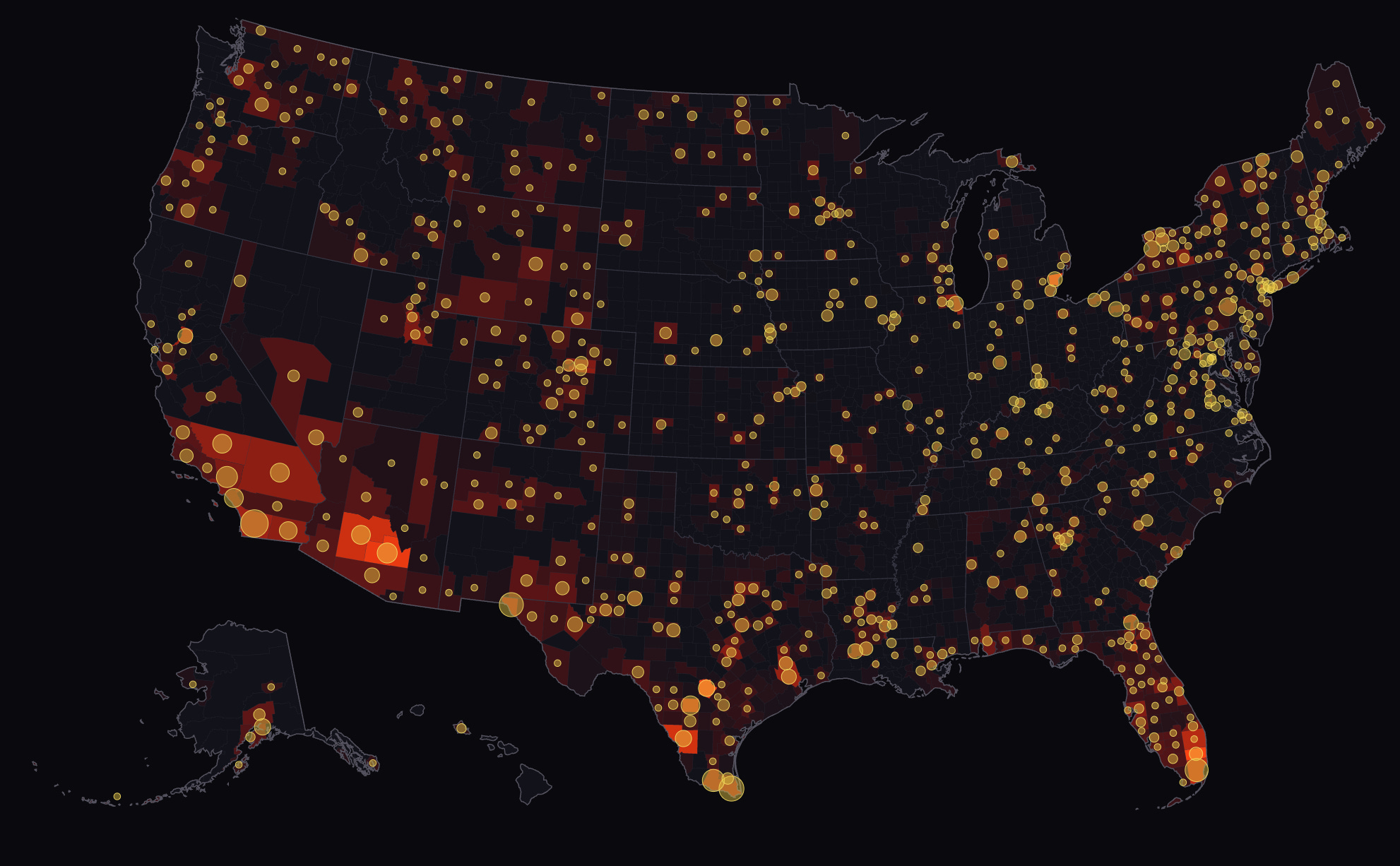
Following up on a tip from a reader I found both contracts this week through the Detention Pipeline‘s automated ingestion of USAspending.gov data — the open-source early-warning system I launched alongside the investigation. Neither contract appeared in the system I launched with, which only tracked Alaska Native Corporation sole-source contracts. Expanding the search to all ICE contracts — 2,430 of them, across 922 contractors, totaling $13.7 billion — surfaced GardaWorld, KVG, and the full architecture of spending that supports the detention buildout.
Here’s what I found when I pulled the thread.
GardaWorld: From Tim Spicer’s Mercenary Firm to Arizona Detention
GardaWorld Federal Services LLC is registered in Delaware and headquartered in Arlington, Virginia. The name suggests a subsidiary of Montreal’s GardaWorld, the C$13.5 billion private security conglomerate founded by Stephan Cretier. That’s technically true. But GardaWorld Federal Services is actually Aegis Defence Services — the British private military company founded in 2002 by Tim Spicer, the former CEO of Sandline International, one of the most controversial mercenary firms of the 1990s. GardaWorld acquired Aegis in 2015 for $130.7 million.
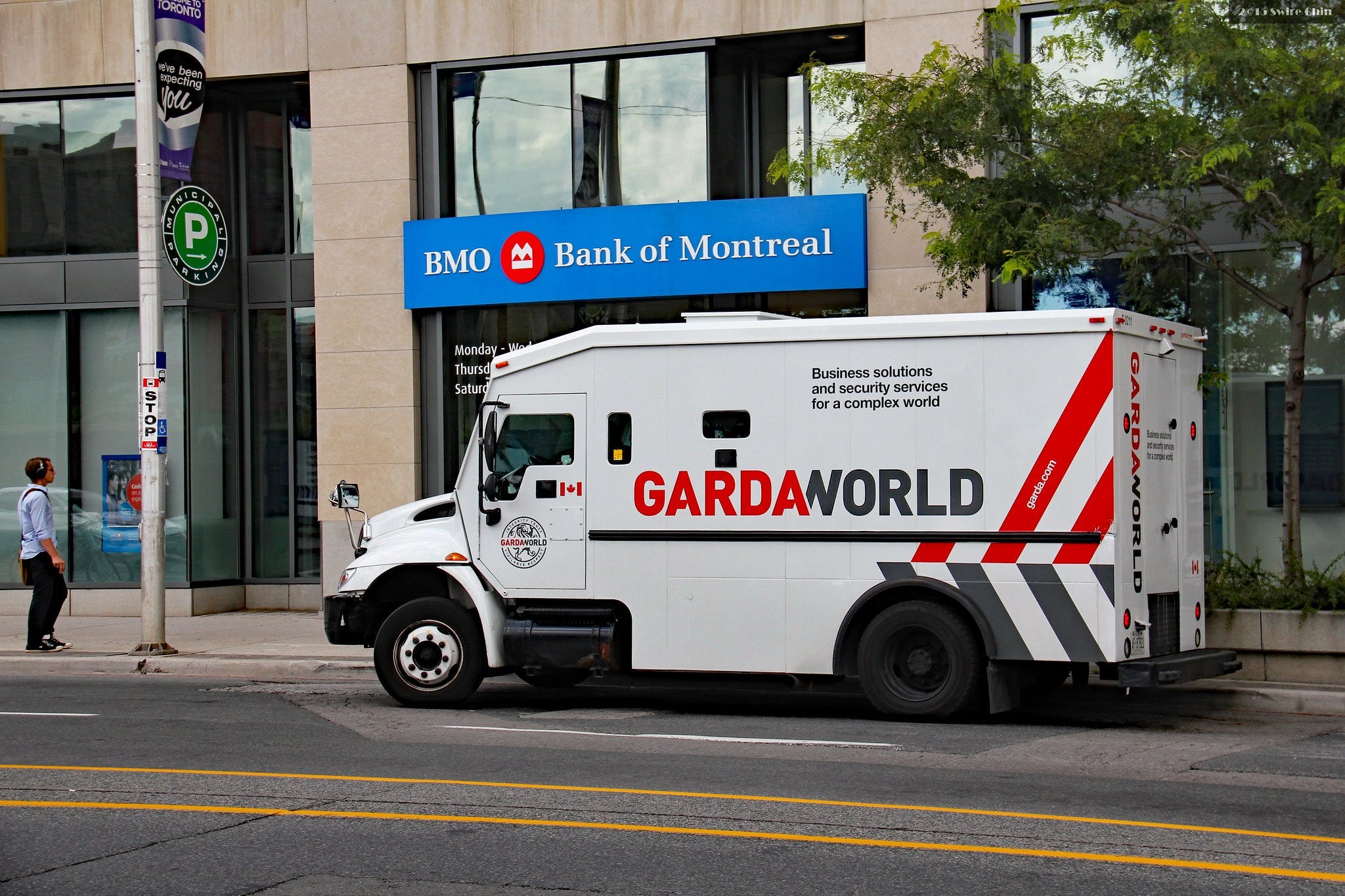
The entity now holding a $313 million ICE detention contract was born running embassy security in Baghdad and Kabul.
GardaWorld has operated adjacent to immigration detention before — with documented problems at every stop.
At Fort Bliss in 2021, GardaWorld staffed an emergency intake site for unaccompanied children. The HHS Inspector General found children going weeks without case managers, panic attacks and mental health deterioration, and a security guard who physically restrained a child and transported her to a psychiatric facility.
At the Everglades facility — known as “Alligator Alcatraz” — GardaWorld provides armed guards, with contracts expanded from $8 million to $37 million and cleared to bid up to $138 million. Amnesty International concluded conditions there “constitute torture” — documenting shackling and use of a cage-like structure called “the box.”
Now: Surprise, Arizona. The facility is a 418,000-square-foot warehouse — formerly the “Surprise Pointe Commerce Center” — purchased by DHS on January 24 for $70 million from RG Surprise AZ LLC, a Rockefeller Group entity connected to Japan’s Mitsubishi Estate. That warehouse cost approximately $12 million in 2023 — a 483% markup, the highest I documented across all eleven warehouse purchases.
Local officials were not informed of the purchase. Eighty residents packed the next city council meeting. Arizona AG Kris Mayes sent DHS ten detailed questions about school impacts, traffic, water, and medical services. No answers have been received. The facility sits 300 yards from residential homes and half a mile from Dysart High School, where more than 60% of students are Hispanic. Across the street: a Rinchem chemical warehouse storing chlorine, hydrofluoric acid, and fluorine.
Planned capacity: 1,500 detainees. Contract ceiling through 2029: $704 million. KJZZ confirmed that GardaWorld “doesn’t have background in detention work.” Expected opening: fall 2026.
KVG: $113 Million to a Company Nobody Can Explain
The companion contract is stranger.
KVG LLC is registered at 180 Redding Lane, Gettysburg, Pennsylvania. CEO John Boyer, a former Marine, declined media comment citing a nondisclosure agreement. Nobody knows what “KVG” stands for.
KVG’s total prior federal contracting history: approximately $120 million, accumulated over 13 years of military logistics — leasing tactical vehicles in Ukraine, hauling 3D printers, removing trees near munitions storage in Poland. Its largest previous single contract was $6.3 million.
The ICE contract: $113 million, with options to $641.8 million. Roughly equal to everything the company has done over those 13 years.
KVG’s self-reported bonding capacity: $5 million per construction contract and $25 million aggregate. The contract is $113 million. How it is bonded has not been publicly explained.
The facility: an 825,000-square-foot warehouse at 16220 Wright Road in Williamsport, Maryland, purchased by DHS on January 16 for $102.4 million. Current infrastructure: four toilets, two water fountains. Planned capacity: 1,500 detainees, turning over every 3-7 days — a potential annual throughput of 182,500 people. Hagerstown’s water treatment facility was built in 1928 and operates at capacity. Nearly all county fire, rescue, and EMS are volunteer; the nearest EMS has eight paramedics.
Maryland AG Anthony Brown filed a lawsuit alleging DHS failed to conduct environmental reviews. A federal judge issued a temporary restraining order halting construction, extended through at least April 16. This would be Maryland’s first ICE detention center.
KVG was named by name in the Warren/Raskin letter of March 29 — one of six companies demanded to disclose their expected profits, lobbying efforts, and administration connections. Response deadline: April 13, yesterday. What I found in expanding the contract ingestion goes further than the congressional inquiry: the bonding capacity mismatch, the contract-to-history ratio, and the infrastructure gaps at the facility itself.
I am continuing to research KVG’s ownership structure. A longer piece is in progress.
How Both Contracts Were Possible
I documented the procurement bypass in detail in The Bypass — the military logistics vehicle called WEXMAC-TITUS repurposed from Afghanistan to domestic detention, the GSA appraisal process it circumvents, the $364 million in documented overpayments across eleven warehouse purchases, and the conflicts of interest among the officials who authorized them. GardaWorld and KVG are now among the 140 companies pre-qualified to receive WEXMAC-TITUS task orders without competitive bidding, environmental review, or GAO protest rights — alongside Cart.com, a Houston e-commerce fulfillment company with zero government experience of any kind.
What’s new this week is what else is moving through the same pipeline.
The $13.7 Billion Supporting Architecture
GardaWorld and KVG are the new entrants. But the detention system doesn’t run on warehouses alone. It runs on charter flights, medical contractors, ankle monitors, case management software, and the two private prison operators who have been building this infrastructure for decades.
Expanding the Detention Pipeline’s ingestion to all ICE contracts — not just the ANC sole-source contracts I started with — revealed the full supporting architecture. 2,430 contracts. 922 contractors. $13.7 billion in a single year.
The aviation layer alone is $1.6 billion: CSI Aviation holds $673 million for ICE Air deportation flights; Classic Air Charter holds $794 million for daily charter services. These are the planes that move people from county jails to detention facilities to deportation flights — the physical logistics that make the distributed model work.
The private prison operators hold $1.7 billion between them: GEO Group at $1.3 billion across 32 contracts — Adelanto, Tacoma, Aurora, Broward, and a dozen more — and CoreCivic at $442 million across 14. GEO’s former officials now occupy senior ICE positions; I traced that revolving door back to Wackenhut’s dissident surveillance files in the 1960s. Their contracts predate the warehouse strategy and will survive it.
The medical layer: $641 million to STG International for staffing inside detention facilities. The monitoring layer: $381 million to B.I. Incorporated for ISAP ankle monitoring — the closed loop that tracks people who aren’t in facilities but aren’t free either. The technology layer: $150 million to Palantir for ICE’s case management system, the software that connects arrest records to detention beds to deportation flights.
And the new facility construction: $598 million to Acquisition Logistics and $453 million to Amentum Services, both for Camp East Montana at Fort Bliss — more than a billion dollars for a single site, the same facility where Victor Manuel Diaz died eight days after arrest.
All of it is now tracked, classified by detention relevance, and cross-referenced by county in the Detention Pipeline. When a county has an IGSA, a 287(g), a GEO Group contract, and commission activity all pointing at it, the heat score reflects the convergence. That’s 11 signal types across nearly 2,000 counties, updated with every ingestion run.
What the Commission Scanner Found This Week
The other infrastructure investment: I rebuilt the county commission scanner and nearly tripled its coverage.
County commissions are where detention deals get approved — or killed. I scan Legistar portals automatically for keywords: IGSA, ICE, detention, 287(g), bed capacity, GEO Group. This week I rewrote the scanner to run all counties in parallel, then expanded from 30 portals across 12 states to 79 portals across 25 states.
The expanded scanner surfaced signals I’d been blind to:
Oklahoma County — 17 hits in 30 days. The Criminal Justice Authority is actively building a detention center: budget evaluations, construction presentations from contractors, bond oversight, furlough planning. This county isn’t being pitched. It’s already under construction.
Brazoria County, TX — “Preliminary Engineering Services — Water Supply for Detention Facility.” Infrastructure procurement for a facility with no public announcement.
Baltimore — “Private Detention Centers – Citywide Ban.” Preemptive legislation.
Harris County, TX — Seven commission hits including ICE discussion. Westchester County, NY — “Discussion on ICE in Westchester County.” Madison, WI — “Emergent Immigration, Deportation and Housing Issues.”
Each signal is tracked, scored, and cross-referenced. When the next meeting discusses the same topic, the county’s heat score rises. When it converges with a contract, a 287(g), or a real estate trace, the pattern becomes visible. That’s how early warning works.
92 Community Fights
The Choctaw Nation in Durant, Oklahoma purchased the warehouse ICE was targeting — a 1.24-million-square-foot former Big Lots distribution center. A sovereign tribal nation buying the warehouse before ICE could use it. Chairman Joseph Rupnick’s words: “We know our Indian reservations were the government’s first attempts at detention centers.”
That’s one of 92 community fights I’ve now documented across 40 states — up from 13 at launch. Wilson County, Tennessee killed a 16,000-bed mega-center on a 24-1 vote of all-Republican commissioners. Bristol County, Massachusetts went from the most aggressive ICE collaborator in the country to zero transfers after a single sheriff’s election. In Newport, Oregon, 800 people packed a city council meeting in a town of 10,000.
Every fight teaches the next community something. That’s why they’re in the system.
The Numbers
Launch night (April 12) → Today (April 14):
Knowledge base entries: 1,644 → 17,500
County fights documented: 13 → 92
States with fight coverage: 7 → 40
ICE contracts tracked: 244 → 2,430
Commission portals monitored: 17 → 79
States with commission monitoring: 6 → 25
Facilities indexed: 459 → 1,294
Counties scored: 1,644 → 1,998
Growth reflects both new research and the expansion of automated ingestion to the full ICE contract universe.
109 commits in less than a week. The system gets smarter every time a commission meets, every time a contract is awarded, every time someone looks up their county and submits what they know.
How to Help
Look up your county. Every county page has tip buttons for meeting minutes, local news, closed-session reports, and building activity. One URL from a local resident gives me a permanent monitoring target. Sensitive tips can go to an encrypted email listed on every county page.
Fork it. Everything is open source under CC-BY-SA. The ingestion pipeline, the scoring algorithm, the Legistar scanner. Run discovery against your state. Contribute upstream.
Subscribe. The Detention Pipeline is the data layer for an ongoing investigation at The RAMM. Hosting, data pipelines, and the ongoing research cost real money. Reader support is what keeps it independent. Subscribing is the most direct way to make sure this work continues.
The detention buildout was engineered to outrun public scrutiny — distributed across hundreds of counties, funded through a military procurement bypass, contracted to companies with no public profile.
I’m building the system that watches it all at once. It’s been two days, and it’s already finding things.
The Detention Pipeline is an open-source early-warning system tracking ICE detention expansion across all U.S. counties. The RAMM is the investigation it supports. Data current as of April 14, 2026.
Also have you reached out to Indivisible? On April 25th , they're coming together for the Communities Not Cages National Day of Action to show up in defense of immigrants through hosting non-violent and peaceful local actions. They held an online training event: Movement Call: National Day of Action to Stop ICE Warehouse Detention today. Maybe they can share your tool with the training list?
This is amazing. Great work!