

The filing revealed the mechanics of Lutnick’s “divestiture.” When he left financial services firm Cantor Fitzgerald to become Commerce Secretary, his son Brandon acquired majority control through Dynasty Trust A. The money for that acquisition? A loan from Tether—the same company whose $133 billion in reserves Cantor Fitzgerald manages.
The collateral structure means Tether (reportedly under DOJ investigation before Trump took office) now holds a lien on the trust that controls Cantor. The company that depends on Cantor to custody its treasury effectively owns Cantor itself.
And the man who orchestrated this arrangement now sits on the Digital Asset Working Group shaping Tether’s regulatory future.
The Architecture
Howard Lutnick was confirmed as Commerce Secretary in February 2025 with 106 identified conflicts of interest — the most ever tracked for any cabinet member. What happened next wasn’t divestiture. It was a reorganization.
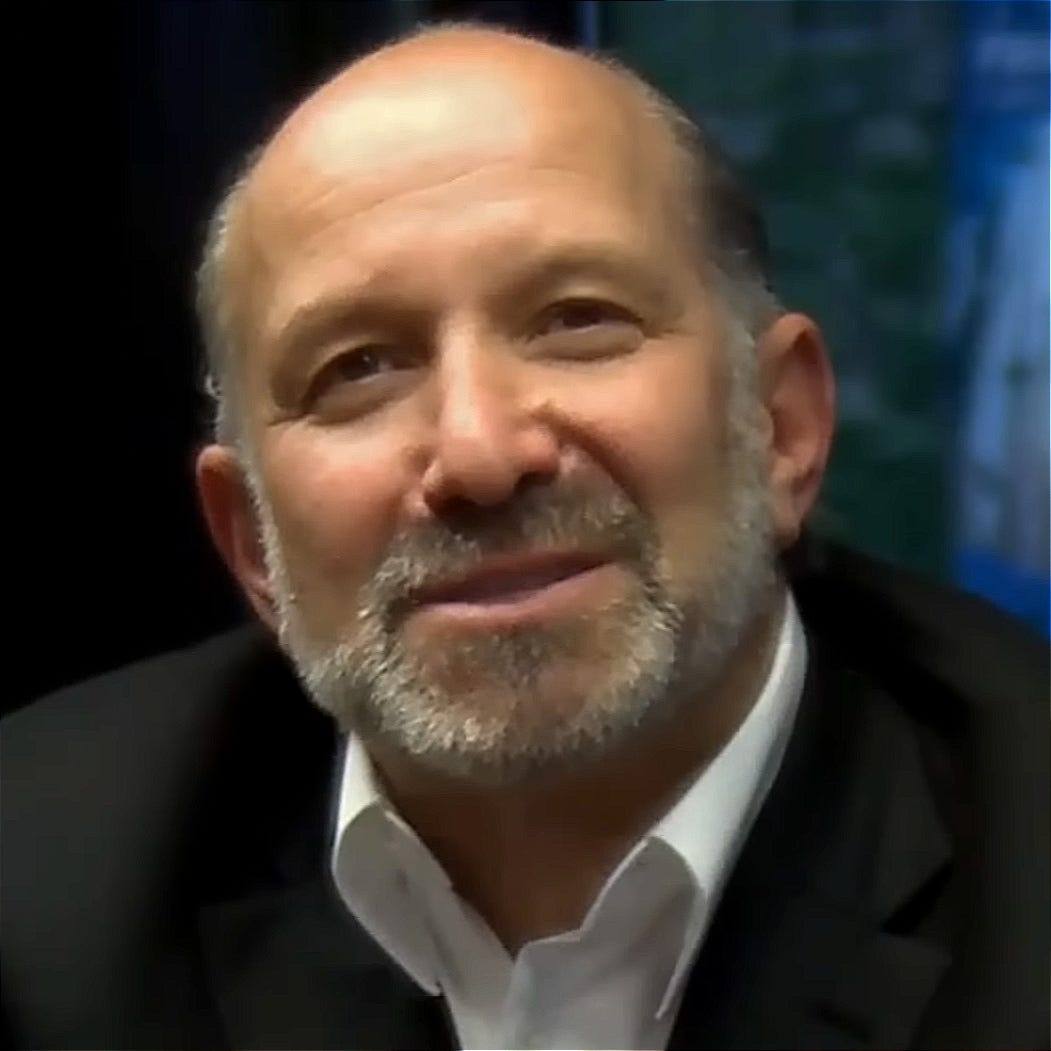
On the same day Howard stepped down, his sons stepped up. Brandon Lutnick became CEO and Chairman of Cantor Fitzgerald. Kyle Lutnick, 28, became Executive Vice Chairman of Cantor --- and was appointed to the board of Newmark Group, the commercial real estate brokerage Howard had built into a billion-dollar operation.
The structure is elegant: Howard makes the policy. Brandon and Kyle make the money. The family keeps everything.
But it doesn’t stop with the sons.
Howard’s brother-in-law, Rick Owen Lambert, M.D., was appointed Senior Advisor at the Department of Health and Human Services. His financial disclosure reveals that he serves as Administrative Trustee of the Lutnick 2020 Descendants Trust and the Lutnick Family Trust --- while holding $1 million to $5 million each in Newmark and BGC Partners stock. A Lutnick family member, managing Lutnick trusts, holding Lutnick company stock, inside the federal government.
Howard’s Chief of Staff at Commerce, Yevette DePinto, also holds $1 million to $5 million in Newmark stock.
This is the Lutnick System. Not one person with a conflict of interest. A family network embedded across the federal government, with financial interests in every direction policy flows.
The Epstein Thread
The system didn’t start in 2025. Its roots reach back more than a decade — to a relationship Howard Lutnick has spent years trying to minimize.
In a 2024 podcast interview, Lutnick described a 2005 visit to Jeffrey Epstein’s Manhattan townhouse. He said he saw a “creepy massage room.” He said Epstein got “weirdly close” and made a suggestive remark. He said he and his wife agreed: “I will never be in the room with that disgusting person ever again.”
The documentary record tells a different story.
In 2011, Lutnick had an hour-long engagement at Epstein’s home. In December 2012 (four years after Epstein’s conviction) he brought his wife, four children, and their nannies to Epstein’s private island for lunch. Under Senate questioning, he could not recall why. “I don’t recall why we did it,” he testified. “But we did.” That same month, John Paulson sent Epstein a UJA Federation solicitation honoring Lutnick, characterizing Epstein as “a close friend of the Lutnicks.”
And in 2017: twelve years after the “never again” decision, Epstein donated $50,000 to a dinner honoring Howard Lutnick, routed through his executive assistant Lesley Groff.
But the relationship wasn’t just social. By 2013, Cantor Fitzgerald’s senior lawyers were negotiating a formal joint venture with Urramoor Limited — a company controlled by Prince Andrew — to channel sovereign wealth fund business to Cantor. The deal documents reached Epstein’s inbox the same day they were sent. And when Epstein objected that a formal joint venture would trigger Nevada gaming commission disclosure, he dictated the restructure himself: strip out the joint venture name, the sovereign immunity waiver, the visible loan. What remained was an anonymous referral pipeline - and Epstein approved a 20% cut for the intermediary, calling it “PA’s original idea.”
Kait Justice has done extraordinary reporting on the full scope of this deal. Read her investigation:
In February 2026, Andrew was arrested on suspicion of misconduct in public office — for forwarding classified UK trade intelligence to Epstein within minutes of receiving it. The British government has classified his full trade envoy records until 2065.
The Commerce Secretary’s firm structured deals around a convicted sex trafficker’s objections to disclosure requirements --- deals involving a prince who was selling state secrets to that same trafficker. On May 6, the House Oversight Committee has the opportunity to ask Lutnick about this under oath. These are among the questions that must be answered:
Why was the joint venture restructured specifically to avoid regulatory disclosure?
Which sovereign wealth funds did Urramoor refer to Cantor Fitzgerald?
Are those sovereign wealth fund channels still operational?
Why did Epstein donate $50,000 to a dinner honoring you in 2017?
The Tether Trap
The Epstein network built the channels. Tether now finances the whole structure.
Cantor Fitzgerald has served as Tether’s primary banker since approximately 2021, custodying roughly $140 billion in U.S. Treasury reserves making Tether the 17th-largest holder of American debt, with Cantor as the gatekeeper. In 2024, Cantor acquired a 5% equity stake in Tether worth approximately $600 million. Cantor built a $2 billion Bitcoin financing program backed by Tether collateral. And Cantor brokered Tether’s $775 million investment in Rumble, the money-losing video platform favored by the far right.
Then came the “divestiture.”
When Howard entered government, he sold his Cantor stake to Dynasty Trust A, controlled by Brandon. But Brandon didn’t have the money. So Tether provided the loan. The UCC filing is public: Tether holds a security interest in every asset of the trust that owns Cantor Fitzgerald.
Think about what this means. The company that Cantor custodies $140 billion for now holds collateral on Cantor itself. The Commerce Secretary’s family wealth depends on Tether’s continued success. And the Commerce Secretary sits on the Digital Asset Working Group shaping cryptocurrency regulation --- without recusing himself.
When the GENIUS Act (the stablecoin regulatory framework that directly benefits Tether) was signed into law in July 2025, no one at Commerce raised a flag. Tether’s CFO had reportedly told associates that Lutnick would “use his political clout” to reduce scrutiny of the company.
Meanwhile, the DOJ is investigating Tether for money laundering and sanctions evasion. An estimated $8 billion in Russian sanctions circumvention has flowed through Tether’s USDT stablecoin. And the man whose family’s fortune depends on Tether helps set the regulatory environment in which that investigation proceeds.
The Tariff Machine
If the Tether conflict is the most dangerous, the tariff scheme is the most brazen.
Howard Lutnick was the principal architect of Trump’s tariff policy. He publicly championed the tariffs, telling Americans to “rest assured, tariffs are not going away.” He went on Fox News and urged viewers to buy Tesla stock; a direct violation of federal ethics rules.
While Howard built the tariff wall, Brandon’s Cantor Fitzgerald created financial products allowing hedge funds to bet on tariff outcomes. The firm offered companies the opportunity to trade their legal claims to future tariff refunds for 20 to 30 cents on the dollar --- a massive profit margin for anyone who believed the tariffs would eventually be struck down.
On February 20, 2026, the Supreme Court ruled 6-3 that Trump’s sweeping tariffs were unconstitutional. A $100 billion secondary market for tariff refund claims exploded into existence. Anyone holding refund rights at 20 to 30 cents saw returns of three to five times their investment.
Cantor denies executing any trades. They admit their salespeople “explored” the products. Three congressional investigations: Wyden and Warren in the Senate, Raskin in the House — are demanding records.
Then there’s USA Rare Earth. Commerce conditioned a $1.6 billion critical minerals deal on private fundraising. Cantor Fitzgerald served as lead placement agent for the $1.5 billion private raise --- collecting fees on a deal that Howard’s department created. Billionaire Trump allies Schwarzman, Griffin, and Cohen bought discounted shares in the Cantor-brokered offering.
The father creates the deal. The sons broker it. The family collects the fees.
The Detention Connection
Kyle Lutnick’s piece of the system runs through real estate.
When Howard left Newmark’s board, Kyle took his seat. He now sits on the board of a company that brokers warehouse sales to ICE.
Newmark Robinson Park, Newmark’s Oklahoma City affiliate, was the listing broker for at least two properties targeted for ICE detention conversion --- a 415,000-square-foot warehouse in Oklahoma City and a 1.24-million-square-foot former Big Lots distribution center in Durant Oklahoma. Both deals were blocked by community opposition and the Choctaw Nation, respectively. But Newmark remains positioned alongside other key institutional investors CBRE, JLL, and Cushman & Wakefield to collect millions in commissions from the administration’s $38.3 billion warehouse detention expansion.
On March 29, 2026, 54 Congressional Democrats sent investigation letters to six companies involved in the warehouse deals. Newmark was one of them. The letter is addressed to CEO Barry Gosin, and it makes the connection explicit: Newmark was “previously owned by Commerce Secretary Howard Lutnick and now owned by his sons.”
Kyle Lutnick sits on the Newmark board. Newmark brokers these deals. The commissions flow to the family.
The Pattern
Here is what the Lutnick System looks like when you step back far enough to see it whole:
Howard sits in the Cabinet making tariff policy, crypto regulation, trade deals, and procurement decisions.
Brandon runs the firm that profits from tariff uncertainty, brokers the deals Commerce creates, and depends on Tether for the family’s ownership structure.
Kyle sits on the board of the real estate company brokering warehouse sales for ICE’s $38 billion detention expansion.
Rick Lambert manages the family trusts from inside HHS while holding millions in family company stock.
Yevette DePinto holds Newmark stock while running the Commerce Secretary’s office.
Tether finances the entire structure --- and gets favorable regulation in return.
Epstein’s network built the sovereign wealth fund channels that Cantor still operates through.
The “divestiture” didn’t separate Howard from his financial interests. It distributed them across family members, trusts, and a cryptocurrency company under federal criminal investigation. Every policy decision flows through the same family. Every dollar flows back.
The Raskin/Warren investigation letters are due back April 13. The House Oversight interview is May 6. Three separate congressional investigations into tariff insider trading continue.
The question is not whether Howard Lutnick has conflicts of interest. The question is whether there is any aspect of his job where his family doesn’t profit.
The RAMM documents the connections that beat reporting can't see — 4,776+ sourced events at capturecascade.org.
Free subscribers get every investigation. Paid subscribers get draft chapters of the book.
Sources
Primary Timeline Events:
Reporting:
Tether Made Loan to Lutnick’s Children as They Bought His Assets (Bloomberg, March 2026)
The Lutnick Deal: Epstein, Prince Andrew (Kait Justice)
Real Estate Brokers Are Profiting From Warehouse Sales to ICE (Jacobin/The Lever, February 2026)
Wyden, Warren Probe Lutnick Firm’s Tariff Bets (Senate Finance Committee)
Raskin Demands Records on Tariff Profiteering (House Judiciary Democrats)
Warren, Raskin Investigate Warehouse Detention Contractors (March 2026)
Howard Lutnick gives sons top Cantor jobs (Fortune, February 2025)
5-Star Rating for Conflicts of Interest (Salon, April 2025)
Epstein Section Sources:
“Massage room” / “never again”: NY Post “Pod Force One” podcast, fall 2024
2011 home engagement: Lutnick Senate testimony, Feb 10, 2026; EFTA00307005-307015
2012 island visit: EFTA00398732, EFTA00399318, EFTA00399319; Senate testimony
Paulson “close friend” letter: Kahn deposition March 11, 2026; CNN Feb 15, 2026
2017 $50K donation: EFTA02229720; Kahn deposition; Daily Beast
Epstein objection and restructure: Kait Justice, kaitjustice.substack.com, April 8, 2026
Cantor Urramoor contract: EFTA01141453 (justice.gov)
Urramoor UK registration: Companies House 08424933
Andrew arrest: Multiple outlets, February 2026
2065 classification: UK government records policy
Financial Disclosures:
Howard Lutnick (ProPublica)
Rick Owen Lambert (ProPublica)
Yevette DePinto (ProPublica)
Congressional Documents:
absolutely incredible. thank you for your work on this.
The issue isn’t just conflict. It’s whether the system itself has been engineered to make accountability nearly impossible.