

Minneapolis Banned Chokeholds After George Floyd. Federal Agents Used Them 40+ Times.
The city that reformed itself. The feds who came to undo it.
Two Scenes, Same City
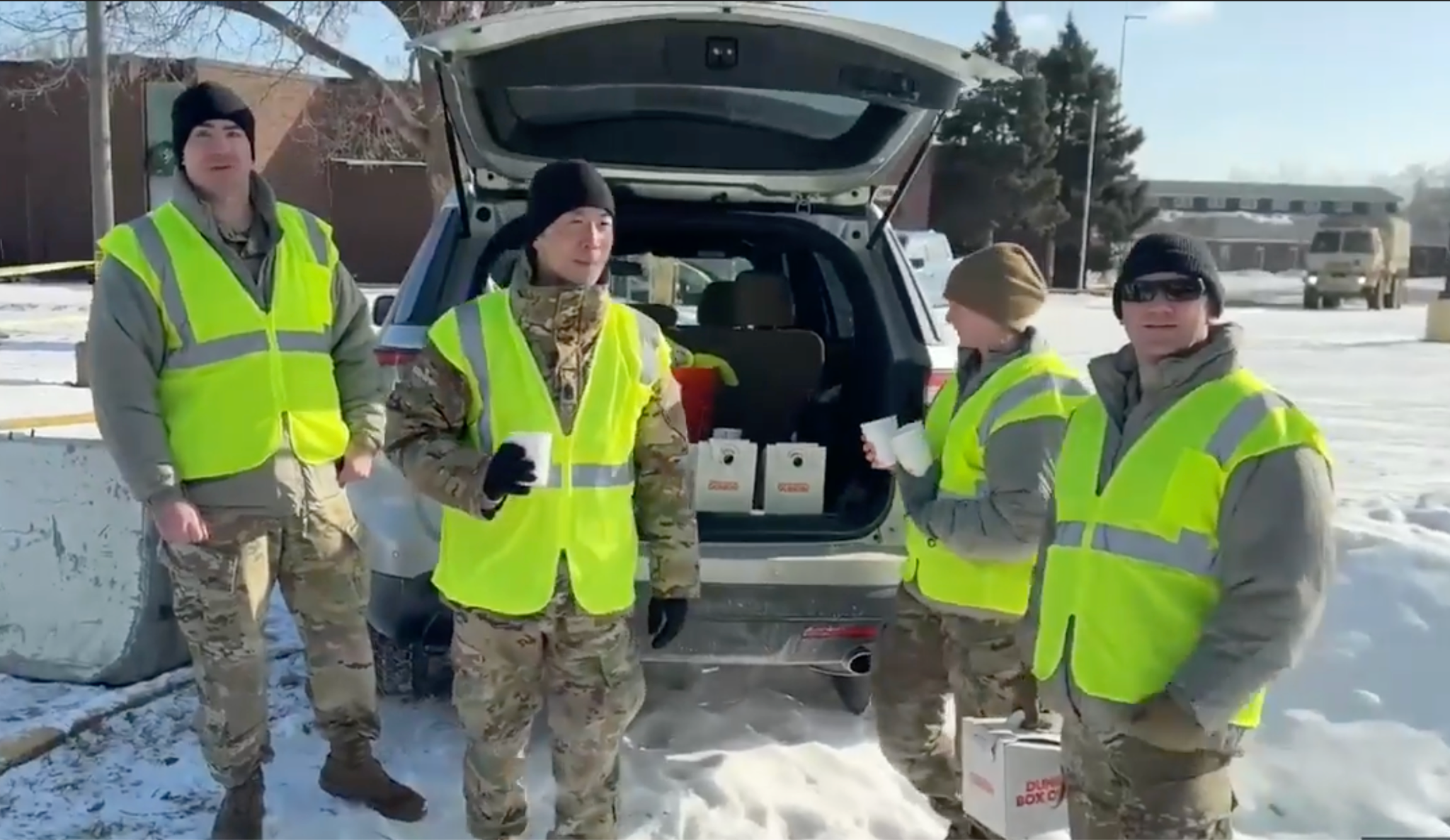
Sunday afternoon, January 26, 2026. Outside the Whipple Federal Building in Minneapolis, members of the Minnesota National Guard stand in neon reflective vests. They’re handing out coffee, donuts, and hot chocolate to protesters in the subzero cold. A guardsman explains: this is their “demonstration of safety and security.”
A mile east, candles and flowers mark the spot where federal agents shot Alex Pretti the day before. Pretti was a 37-year-old ICU nurse. According to the Washington Post’s analysis of multiple camera angles, he was helping a woman up off the ice when agents tackled him. An agent removed his legally-carried handgun from his waistband. Then they opened fire.
Within hours, Stephen Miller called him a “domestic terrorist” and an “assassin.” Border Patrol Commander Gregory Bovino said he came to “massacre law enforcement.” DHS Secretary Kristi Noem said he “approached DHS officers with a pistol” and “resisted attempts to disarm him.”
The videos show a man with a phone in his hand, his other palm raised, backing away.
Two visions of what authority means. One learned something in the five years since George Floyd. One didn’t.
What Minneapolis Built
George Floyd was murdered on May 25, 2020, at 38th Street and Chicago Avenue. A police officer kneeled on his neck for nine minutes and twenty-nine seconds while Floyd said “I can’t breathe” and called for his mother.
The 3rd Precinct burned. The National Guard deployed in combat posture — over 7,000 soldiers, the largest activation in its 164-year history. An external review later found most Guard members were trained for war, not civil disturbance. It was chaotic, criticized, fraught.
In the five years since, Minneapolis did something rare: it actually changed.
The city banned chokeholds and neck restraints. Required de-escalation techniques. Implemented duty-to-intervene policies requiring officers to stop colleagues using excessive force. After Amir Locke was killed in a no-knock raid in 2022, the city banned no-knock warrants. It eliminated pretextual stops. Prohibited officers from deactivating body cameras.
In 2022, Mayor Jacob Frey hired Brian O’Hara as police chief — not a Minneapolis insider, but a reformer from Newark, where he’d led implementation of a federal consent decree. Under O’Hara, Newark developed a de-escalation model that produced something nearly unprecedented: an entire year without a police-involved shooting. He came to Minneapolis to do the same work.
Homicides dropped over 30% between 2021 and 2025. The city created behavioral crisis response teams — when you call 911 for a mental health emergency, unarmed responders show up instead of armed officers. Slow progress. Incomplete. But real.
The reforms weren’t just inside the police department. The uprising left infrastructure.
Neighborhood communication networks that formed during the unrest became permanent. Signal chats. Phone trees. “I have all my neighbors’ numbers in my phone,” one resident told NPR. “We can start a Signal chat like that.”
When ICE arrived in December 2025, that infrastructure activated immediately. Residents flooded legal observer trainings. Volunteers distributed 3D-printed whistles — now the signature symbol of resistance, dropped off by the bagful at coffee shops and hardware stores. Caravans of observers followed ICE vehicles, documenting movements, jumping out to record when agents made stops.
And when the Guard deployed again in January 2026, they’d learned too. They wore neon reflective vests — specifically so protesters wouldn’t confuse them with federal agents. They handed out coffee and donuts in the freezing cold. A guardsman explained: this was their “demonstration of safety and security.”
Governor Walz was making a visual argument. This is what protecting a community looks like. That — the masked men in unmarked cars who shot two citizens in 17 days — is something else entirely.
On January 23, Minneapolis saw something it hadn’t seen since 1934: a coordinated economic shutdown. Labor organizations urged members to participate in a statewide day of “no work, no shopping, no school.” Tens of thousands marched in subzero temperatures. More than 700 businesses closed. The city that hosted the Teamsters strike — one of three in 1934 that transformed American labor — was remembering how collective action works. Training programs in nonviolent methods filled immediately. The tactics were diverse and coordinated: protective accompaniment caravans, alert whistles, constant documentation, economic pressure, moral witness. Over 100 clergy were arrested at MSP Airport, singing hymns as they were led away.
Organizers from Maine to Chicago were learning from Minneapolis partners. The infrastructure of resistance had been built, maintained, and was now being deployed.
What the Federal Government Brought
The administration has been escalating enforcement in cities that saw large Black Lives Matter protests. They may have thought Minneapolis would be a soft target — the city where George Floyd died, where the 3rd Precinct burned, where “riots” dominated the national narrative. A city to make an example of.
What they found was a city that learned.
Into this city — a city that had done the work, built the networks, reformed its institutions — the federal government sent 3,000 agents.
Operation Metro Surge deployed more DHS personnel to the Twin Cities than the combined sworn officers of Minneapolis and St. Paul police departments. They wore masks. Drove unmarked vehicles. Operated in early morning darkness.
They knew where to go. An ICE agent testified under oath that targeting works through ELITE — Enhanced Leads Identification & Targeting for Enforcement, built by Palantir. You open the interface. Pins appear on a map: addresses, confidence scores. You draw a shape around an area. The system shows you everyone inside it. “You’re going to go to a more dense population,” the agent explained. You go to the target-rich areas.
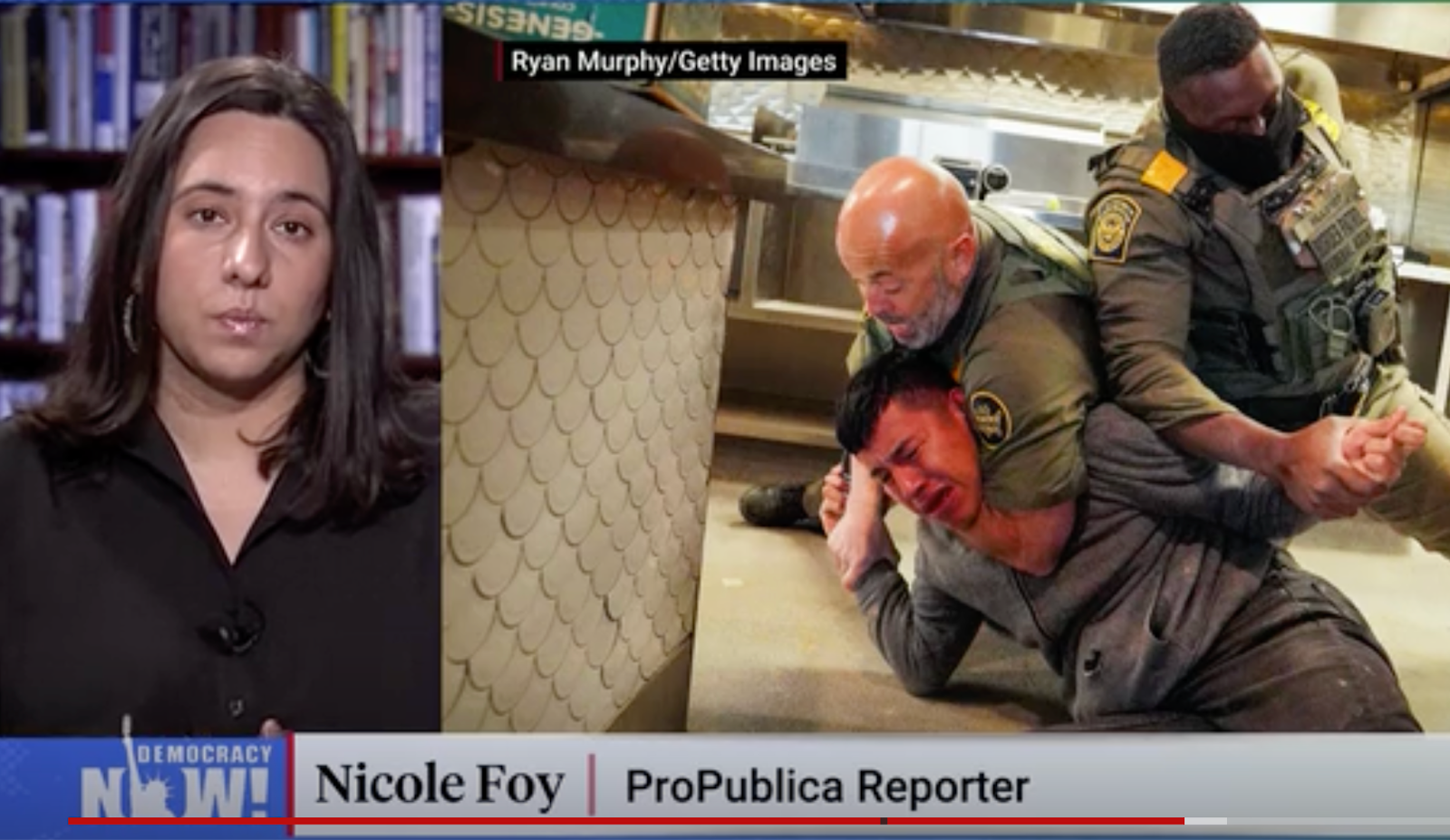
A Minnesota Reformer investigation documented more than 40 cases of federal agents using chokeholds and neck restraints — the exact techniques Minneapolis banned after George Floyd’s murder.
On January 7, ICE agent Jonathan Ross shot Renee Nicole Good three times as she sat in her SUV. The independent autopsy found one bullet entered her left temple and exited the other side of her head. Her last words, captured on video, were: “That’s fine, dude. I’m not mad at you.”
Within hours, Secretary Noem called her a “domestic terrorist” who had tried to “weaponize her vehicle” and “run over” agents.
The video showed her turning away.
On January 24, Border Patrol agents shot Alex Pretti while he was on the ground. Witnesses say he was helping a woman who had been pushed down by agents. Multiple videos show his phone in his hand, not a gun. The Washington Post confirmed an agent removed Pretti’s legally-carried firearm from his waistband before the shooting began.
Within hours, Miller called him a “domestic terrorist.” Bovino said he wanted to “massacre” agents. Noem said he “resisted attempts to disarm him.”
The videos showed a man backing away with his palm raised.
When the Minnesota Bureau of Criminal Apprehension arrived with a search warrant signed by a judge, federal agents blocked them from the crime scene.
Chief O’Hara — the reformer who came from Newark, who’d spent his career building the accountability systems that federal agents were now evading — said the scene was “contaminated” before state investigators could enter. He refused a federal order to leave, though feds controlled access. He confirmed publicly that Pretti was a “lawful gun owner with a permit to carry.”
This is what it looks like when a reform police chief watches federal agents do exactly what he’s spent his career trying to end. The techniques banned. The accountability evaded. The lies deployed before bodies are cold.
DHS announced it would lead the investigation of its own agents.
Brooklyn Park Police Chief Mark Bruley put it plainly: federal agents had racially profiled his own off-duty officers. “Every person who wears brown skin is a target.”
The Contrast
On Sunday, Dana Bash asked Gregory Bovino on CNN what crime Alex Pretti had committed.
Bovino couldn’t name one. His answer: Pretti “injected himself where he did not need to be.”
Bash invoked Stranger Things: “It feels like we’re in the Upside Down where we have law enforcement and conservatives who are very pro-Second Amendment saying the problem was he had a gun legally.”
When she pressed on whether Pretti ever touched his weapon, Bovino refused to answer: “We’re not going to adjudicate that here on TV.”
The narrative collapsed in real-time. From “approached with gun to massacre law enforcement” to “he was there and he shouldn’t have been.” That’s not a crime. That’s not a justification. That’s an admission that they have nothing.
Even Maria Bartiromo — on Fox News — pushed back on Kash Patel. “How was he threatening Border Patrol?” she asked. “He was filming it.”
Patel retreated to: “No one who wants to be peaceful shows up at a protest with a firearm that is loaded with two full magazines.”
In Minnesota. An open-carry state. Where Pretti had a valid permit.
The Second Amendment, it turns out, is conditional. The condition is political loyalty.
The Local Response
In 2020, Mayor Jacob Frey struggled. He was blamed for slow response, for not coordinating with Walz, for losing control. They pointed fingers at each other while the 3rd Precinct went up in flames.
In 2026, Frey watched the video of Alex Pretti’s death and called it “bullshit” — “a federal agent recklessly using power that resulted in somebody dying.”
Governor Walz: “This long ago stopped being a matter of immigration enforcement. It’s a campaign of organized brutality against the people of our state.”
Walz on the official DHS account: “Thank God we have video because, according to DHS, these seven heroic guys took an onslaught of a battalion against them or something. It’s nonsense. It is nonsense, and it’s lies.”
Something changed in five years. Not just the policies, not just the infrastructure. The posture. Local leaders who did the reform work know what accountability actually requires. They’ve seen the videos. They refuse to let the lies stand.
The Irony
Minneapolis spent five years reforming the institution that killed George Floyd. Chief O’Hara implemented de-escalation training. The community built networks of mutual protection. The Guard learned to show up in neon vests with coffee instead of combat gear. The protesters developed nonviolent discipline that held even under tear gas and pepper spray.
And then the federal government arrived and did exactly what the old Minneapolis Police Department did — with more firepower, less accountability, and explicit political targeting.
The agents wear masks. They refuse to identify themselves. They seize crime scenes and block state investigators with warrants. They shoot citizens and smear the dead as terrorists before the bodies are cold. They investigate themselves.
Everything Minneapolis worked to change, the federal government embodies.
The Choice
At the Timberwolves game on Sunday, the arena held a moment of silence for Alex Pretti. The crowd broke the silence with chants of “Fuck ICE!” that spread through the stadium. The dunk squad wore “ICE Out” T-shirts.
Outside the Whipple Federal Building, National Guard members handed out donuts while federal agents inside processed the people they’d arrested.
One Minneapolis. Two visions of what authority means.
The city that killed George Floyd reformed itself — imperfectly, incompletely, but genuinely. It learned that communities are protected through trust, accountability, and service. Through de-escalation. Through coffee and donuts and neon vests and answering questions instead of evading them.
The federal government learned the opposite lesson: —or rather, learned from different teachers. Secretary Noem made the doctrine explicit: “one of ours, all of yours.”
It learned that you can shoot citizens and call them terrorists. That you can lie on camera when the video contradicts you. That you can seize evidence and investigate yourself. That you can punish cities for their political “choices” with 3,000 armed agents and call it law enforcement.
Minneapolis learned.
The feds didn’t.
And that’s why this city — this specific city, with this specific history — may be where the resistance takes hold. They’ve done this before. They’ve buried the dead, demanded accountability, and built something better from the ashes.
They know the difference between protection and occupation.
Next: The 100-Year Storm: Boston 1854 / Minneapolis 2026 — This has happened before. The playbook is the same. So is the resistance.
The complete documented timeline of events is available at capturecascade.org/viewer
Series Navigation
This article follows the 8-part series The Gamergate Army Gets Badges and Guns and related follow-ups documenting the pipeline from 4chan to federal law enforcement.