

On April 17, The Atlantic published “The FBI Director Is MIA” by Sarah Fitzpatrick, citing more than two dozen sources describing Patel’s pattern of excessive drinking and unexplained absences. His own security detail, the sources said, had on multiple occasions been unable to wake him.
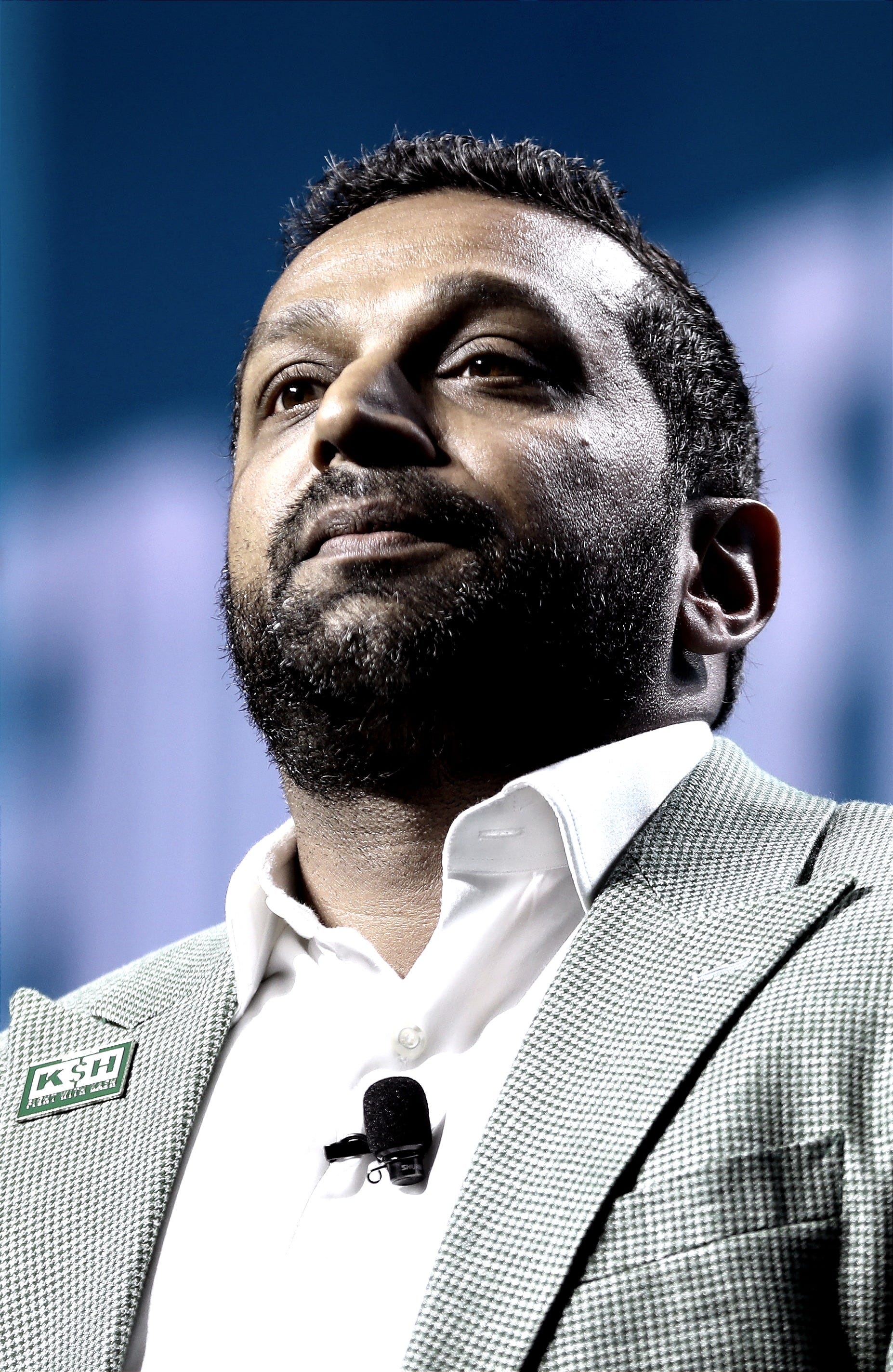
On April 21, four days later — and one day after Patel filed a $250 million defamation suit against the magazine — he stood beside Acting Attorney General Todd Blanche at the Justice Department and announced an 11-count federal grand jury indictment of the Southern Poverty Law Center: six counts of wire fraud, four counts of bank fraud, and one count of conspiracy to commit concealment money laundering. Six months earlier, he’d severed the FBI’s decades-long working relationship with the SPLC after the organization’s “hate map” — its long-running tracker of extremist groups — included Charlie Kirk’s Turning Point USA.
The pattern through these ten days is not a coincidence. It is the single defining mechanism of Patel’s career: a man whose stated orientation keeps colliding with the documented record, and whose response to every collision is denial, lawsuit, and retaliation. The mechanism has a name in the literature of strategic conflict. John Boyd called it mismatch. Your model of reality stops fitting the world. You can’t process what’s happening. Decisions become defensive, then panicked, then incoherent.
Patel has denied the Atlantic reporting and filed suit. He has not addressed the documentary record this piece lays out. The cover is collapsing because the C documentation is breaking through.
The rest of the chronology is the same shape:
On April 24, The Intercept surfaced a 2005 letter from Patel’s Miami-Dade Public Defender’s Office personnel file disclosing two prior alcohol-related arrests — one in 2001 for underage public intoxication, one in 2005 for public urination. “A gross deviation from appropriate conduct,” he’d written at the time.
On April 25, Politico’s Dasha Burns reported — citing a senior White House official — that “it’s only a matter of time” before Patel is removed. The official told Burns that Patel had become a “distraction” and that the President was tired of “seeing him in the news for scandalous headlines.” Karoline Leavitt’s on-record defense — Patel remains “a critical player on the administration’s law and order team” — is the kind of statement the White House issues about people about to be fired.
The 38,000
Start with the simplest possible test of whether the FBI Director tells the truth under oath.
On September 17, 2025, in sworn testimony before the House Judiciary Committee, Patel was asked how many times Donald Trump’s name appears in the Epstein files. He said he didn’t know the precise number — and then, walked through the question in descending order, denied each successive figure. More than 1,000? No. More than 500? No. More than 100? No. “I don’t know the number, but it’s not that,” Patel told the Committee after being asked if Trump’s name appeared 100 times. The FBI Director’s on-the-record number, locked under oath: fewer than 100.
The actual number, per the New York Times‘ systematic count of the DOJ’s January 30, 2026 release: more than 38,000 references to Trump, Melania Trump, and Mar-a-Lago, across more than 5,300 files. The corpus the Times searched is 3 million pages of Epstein materials produced by the DOJ in compliance with the Epstein Files Transparency Act — a law that passed the House 427–0 and was signed by the President.
Asked about the volume, Deputy Attorney General Todd Blanche told CNN’s State of the Union the DOJ had reviewed the files and found insufficient evidence to prosecute: “There’s a lot of correspondence, there’s a lot of emails, there’s a lot of photographs — there’s a lot of horrible photographs that appear to be taken by Mr. Epstein or people around him, but that doesn’t allow us necessarily to prosecute somebody.”
A “lot of horrible photographs that appear to be taken by Mr. Epstein or people around him” is what the Deputy Attorney General said about a corpus that mentions the President of the United States 38,000 times.
Independent analysis of the released files on the DugganUSA full-text portal — searchable by anyone with an internet connection — confirms the scale: the word “Trump” matches 7,220 distinct documents (16,065 pages); “Trump” plus “Epstein” appears in 2,948 documents; “Trump” plus “Maxwell” in 654 documents; “Trump” plus “girls” in 683 documents. Trump appears in 1,803 of those documents — including a 2002 NY Magazine quote calling Epstein “a terrific guy,” party attendance, civil allegations, and an FBI NTOC tip alleging participation in sex acts with minors at corpus citation EFTA01660651. Patel personally appears in 77 documents, all of them news clippings.
You don’t miss by orders of magnitude by accident.
Patel said fewer than 100. The actual number is more than 38,000.
And it isn’t a question of what Patel could have known. In 2025, Patel and Deputy Director Dan Bongino formally requested a definitive FBI accounting of all Epstein evidence from AUSA Maurene Comey. They got it. The accounting documented over 1 million images and videos extracted from Epstein’s seized devices, 34,000 marked responsive, and a corpus of seized devices that included Epstein’s iPhone, an HP server with 4×500GB drives, network video recorders from Little St. James, and 60+ optical discs.
It also documented something specific. During a parallel review of the We Build the Wall fraud case — the prosecution Trump pardoned Steve Bannon out of in 2021 — an FBI examiner found a photo of Donald Trump and Ghislaine Maxwell on Steve Bannon’s iPhone. The image was flagged to the Epstein/Maxwell case team. The government, per the case file, “determined there was no need to do anything with this one.”
A photo of the President and the convicted child sex trafficker, on the phone of the President’s former chief strategist, sitting in the FBI’s evidence room. Patel and Bongino received that accounting. Then Patel told Congress that documents mentioning Trump in the Epstein files numbered fewer than 100.
Then it gets worse. On December 19, 2025 — the DOJ’s first EFTA-mandated release — the department posted to its public Epstein Library website a photograph showing Trump, Epstein, and Maxwell together, displayed in a desk drawer among other photographs. Within 24 hours, NPR identified more than a dozen files that had been removed — the Trump-Epstein-Maxwell photograph among them. The DOJ provided no public explanation. By March 9, 2026, after an NPR investigation exposed selective withholding of Trump-related documents, the DOJ posted an additional 16 pages — interview notes, a law-enforcement report, license records — claiming the files had been “incorrectly coded as duplicative.”
NPR documented 53 missing pages. 37 still remained absent from the public database after the partial fix. The pattern is not a coding error. It is a censorship operation, conducted in public.
On February 26, 2026, the Times reported that three of four FBI interview summaries with a Trump accuser are missing from the DOJ release. The accuser is a woman who alleged Trump sexually assaulted her when she was 13, in the 1980s, and accused Epstein of assault during the same period. The FBI conducted four interviews with her in 2019 and produced four summaries. The DOJ’s index confirms all four exist. The release contains exactly one — the one detailing her accusation against Epstein. The three about Trump are not in the release.
Rep. Thomas Massie — a Republican from Kentucky who co-authored the EFTA — confronted Patel the day after the September hearing, citing FBI Form 302s containing victim testimony naming at least 20 men to whom Epstein trafficked girls. Massie identified Les Wexner by name as an FBI-confirmed co-conspirator. Patel had told Congress there was “no credible information — none” that Epstein trafficked young women to anyone but himself. Ghislaine Maxwell was convicted in federal court of helping Epstein traffic minors to other people. The conviction happened. The FBI Director told Congress it didn’t.
This is not interpretation. It is sworn testimony colliding with the FBI’s own documented record.
The Pattern of False Statements
The Epstein lie is the cleanest because the database is public. But it is one false statement among many, and the others share the same architecture: a sworn denial, then a documentary record that contradicts it.
On QAnon. At his confirmation hearing, Patel testified: “I have publicly, including in the interviews provided to this committee, rejected outright QAnon baseless conspiracy theories.” The documented record, first compiled by Rolling Stone and Media Matters: Patel tagged the anonymous @Q account on Truth Social at least 14 times in 2022. He posted “Having a beer with @Q right now” with a photo of an arm in a flannel shirt — launching the #FlannelFriday QAnon ritual. He signed copies of his children’s book with #WWG1WGA, the QAnon slogan “Where We Go One We Go All.” As director of Trump Media, he described promoting QAnon-adjacent accounts as an intentional business decision: “You can’t ignore that group of people that has such a strong dominant following.”
He didn’t reject QAnon. He cultivated it.
On Trump Media compensation. In his Senate Judiciary Questions for the Record, Patel wrote: “I have never received compensation for serving as a board member for Trump Media and Technology Group.” On January 28, 2025 — eight days after Trump’s inauguration, three weeks before Patel’s confirmation — the TMTG board convened without him and awarded a board-wide RSU package. Patel’s share, as Business Insider and CNBC reported contemporaneously: roughly $800,000 in stock. Patel says he declined it. The grant was issued. The rhetorical posture — “never received compensation” — is reconcilable with the issuance only if you accept that issued-but-not-accepted means “never received.”
On Qatar. This is the one that actually matters.
The Foreign Money Architecture
In February 2021, Patel founded Trishul, LLC, a Delaware/Virginia consulting firm. Across the next four years it generated $2.1 million in aggregate consulting income per his post-confirmation OGE Form 278e financial disclosure. The client roster, as filed:
Trump Media & Technology Group
Save America (Trump’s PAC)
Embassy of Qatar
CSGM A.S., Czech Republic (a Czech arms-industry firm)
Global Tree Pictures (Russian filmmaker Igor Lopatonok’s production company)
American Global Strategies (Robert O’Brien’s post-Trump-1 consulting firm)
And five others.
Three foreign-principal entries — Qatar, Czech Republic, Russian filmmaker — aggregated through a single sole-proprietor LLC, none registered under the Foreign Agents Registration Act.
The Qatar engagement is the pivot. Per The Intercept’s reporting, Patel’s contract with the Embassy of Qatar ran from early 2021 through November 2024 — terminated weeks before his FBI nomination. The subject matter began as pre-2022-World-Cup security advisory and, per Responsible Statecraft’s reporting, pivoted after the World Cup to advising the Qatar Embassy on counterterrorism issues and election monitoring, “even identifying potential personnel in a future Trump administration.”
That’s a foreign government paying a future FBI Director to advise on staffing a U.S. administration. Patel did not register under FARA. Public Citizen filed a complaint with the DOJ FARA Unit on February 4, 2025. Neither he nor Trishul registered. He did not disclose the Qatar engagement on his Senate Nominee Questionnaire — the disclosure surfaced only post-confirmation in the 278e.
Then comes the part that should end careers.
Twelve days after his February 20, 2025 confirmation, on March 4, the DOJ-wide Designated Agency Ethics Official — the senior career ethics official whose job is to enforce recusal rules across the department — issued Patel a 5 CFR § 2635.502(d) “authorization to participate” waiver on Qatar matters. Standard executive-branch ethics rules required a one-year recusal from former-client matters, running to February 20, 2026. The waiver erased it. The justification memo has not been publicly released.
Nine months later, on December 9, 2025, Patel signed bilateral law-enforcement and security-cooperation memoranda of understanding between the FBI and the Qatari Ministry of Interior — with Sheikh Khalifa bin Hamad bin Khalifa Al-Thani, the Qatari Minister of Interior. The same ministry whose embassy had been Trishul’s client. The same ministerial counterpart Trishul had been paid to advise on counterterrorism.
This is not the appearance of a conflict of interest. It is the substance of one, executed in foreign capital, on a U.S. government letterhead.
The Qatar arc is the operational answer to the question of what “FBI Director Kash Patel” means. Foreign principal pays consultant. Consultant becomes FBI Director. Recusal waived twelve days into the job. Bilateral MOU signed with the same foreign ministry nine months later. No FARA registration. No Senate disclosure. No public release of the waiver scope.
The Epstein lie is provable in seconds with a public database. The Qatar arc is the same shape — a stated denial colliding with a documentary record — at the geopolitical scale.
The Agency as Personal Weapon
Now turn to what Patel does with the FBI. The pattern resolves into three modes: the Bureau as enemies-list executor, the Bureau as personal protection racket, and the Bureau as shield for federal misconduct against state oversight.
Enemies-list executor. On August 22, 2025, FBI agents raided John Bolton’s home in Bethesda and his office on M Street, ostensibly investigating the handling of classified information in Bolton’s 2020 memoir — five years after publication. The Biden administration had halted that investigation; Patel revived it. Bolton was on Patel’s enemies list in Government Gangsters. The raid happened on the same day the DOJ turned over its first tranche of Epstein files to House Oversight — the most significant Epstein release at that point. Patel tweeted about the Bolton raid within minutes: “NO ONE is above the law... @FBI agents on mission.”
On September 10, 2025, Brian Driscoll — who briefly served as Acting FBI Director at the start of Trump’s second term — sued Patel in federal court, joined by former Washington Field Office head Steven Jensen and former Las Vegas Special Agent in Charge Spencer Evans. The complaint, filed under penalty of perjury, alleges Patel told Driscoll “the FBI tried to put the President in jail and he hasn’t forgotten it,” that Patel said his bosses had directed him “to fire anyone who they identified as having worked on a criminal investigation against President Donald J. Trump,” and — most damning — that Patel admitted “the nature of the summary firings were likely illegal and that he could be sued and later deposed.”
The FBI Director, in sworn declarations from former senior FBI agents, knew the firings were illegal and did them anyway because his job depended on it. In November 2025, the FBI Agents Association — representing 14,000 agents, more than 90% of all active agents — issued a public statement calling Patel’s firings “erratic and arbitrary retribution.” When the union representing virtually all of your agents goes on the record against you, you no longer have the building.
The April 21 SPLC indictment closes the same loop. The same organization Patel publicly severed FBI ties with in October 2025, indicted on grand-jury charges that allege fraud through the SPLC’s payment of informants embedded in extremist groups — payments SPLC’s own donors say they not only knew about but considered the entire point of the program. Read the indictment timing in sequence with the Atlantic story. Patel’s response to a reporting crisis is not to deny, settle, and recover. It is to use federal grand jury power against an adversary on his enemies list — at exactly the moment his own credibility is collapsing.
Personal protection racket. On February 28, 2026, New York Times reporter Elizabeth Williamson published “Kash Patel’s Girlfriend Seeks Fame and Fortune, Escorted by an F.B.I. SWAT Team,” revealing Patel had assigned an FBI SWAT team based in Nashville as the full-time personal security detail for his girlfriend, country singer Alexis Wilkins. The Bureau had never before provided a separate detail for a director’s romantic partner.
After the Times story ran, Patel’s FBI began investigating Williamson herself — federal agents queried databases on her, recommended opening a preliminary investigation under federal stalking law, and were blocked only when DOJ officials determined there was no legal basis. Times executive editor Joseph Kahn responded: “The FBI’s attempt to criminalize routine reporting is a blatant violation of Elizabeth’s First Amendment rights and another attempt by this administration to prevent journalists from scrutinizing its actions.”
Shield for federal misconduct. Five weeks before the Williamson story, on January 24, 2026, six Border Patrol agents in Minneapolis tackled and shot Alex Pretti — a 37-year-old ICU nurse at the Minneapolis VA, U.S. citizen, AFGE Local 3669 member — approximately ten times in the back over the course of about five seconds, while he was on the ground. Multiple bystander videos verified by Reuters, the Wall Street Journal, and the Washington Post showed Pretti holding only a phone before agents grabbed him; one video shows an agent removing Pretti’s legally-carried handgun from his waistband and stepping back less than a second before another agent opened fire. The Hennepin County Medical Examiner ruled the death a homicide. The federal government has brought no charges against the shooting agents.
Patel’s FBI asserted exclusive federal jurisdiction over the investigation, blocked Minnesota’s Bureau of Criminal Apprehension from the scene despite a judge-signed warrant, refused to identify the shooting officer or release body camera footage, and seized witnesses’ phones. Hennepin County Attorney Mary Moriarty had to sue Patel personally to preserve the evidence. The DOJ then announced it would lead the investigation of its own agents.
Days later, on Fox News’s Sunday Morning Futures, Maria Bartiromo pressed Patel on the federal claim that Pretti had been threatening Border Patrol agents. “How was he threatening Border Patrol?” she asked. “He was filming it.” Patel’s reply: “No one who wants to be peaceful shows up at a protest with a firearm that is loaded with two full magazines.” In Minnesota — an open-carry state, where Pretti had a valid permit. When the Sunday-morning Fox host is making the FBI Director squirm, the orientation is no longer holding.
In March 2026, Patel fired the FBI’s entire Iran counterintelligence unit — weeks before the Strait of Hormuz crisis would put U.S. forces in direct confrontation with Iranian assets.
The retributive instinct is not a glitch in Patel’s operating system. It is the operating system.
The Mismatch
Boyd’s definition of mismatch is simple: your orientation no longer fits reality. You can no longer process what’s happening. You react instead of acting. Tempo collapses. Decisions become defensive, then panicked, then incoherent.
The $250 million defamation suit against The Atlantic is a panic decision. The SPLC indictment three days later is a panic decision. The “I’ve never been intoxicated on the job” press conference is a panic decision. They are the moves of an orientation that no longer fits the world it’s operating in.
The Atlantic sources are FBI staff. The Driscoll lawsuit is sworn declarations from former senior agents. The FBI Agents Association statement is the union of record. The Public Citizen FARA complaint is on the docket. The 38,000 number is from the New York Times‘ systematic count of a public DOJ corpus. The Trishul client list is on Patel’s own ProPublica-indexed disclosure. The December 9 Qatar MOU was photographed and signed in Doha. The Intercept’s arrest disclosure is from Patel’s own personnel file, written in his own hand.
This is what mismatch looks like in real time. The FBI Director sues a magazine that has more lawyers and better facts than he does. The FBI Director announces a federal grand jury indictment of a civil rights organization on the same week his own staff is leaking a pattern of incapacitation. The FBI Director’s personnel file from twenty years ago surfaces — disclosed by Patel himself in 2005 — as if reality is now refusing to stay buried.
What Comes Next
The Politico piece is a placement, not a leak. Senior White House officials don’t tell political reporters “it’s only a matter of time” by accident. The administration is preparing the exit ramp.
But the question of whether Patel survives this news cycle is the wrong question.
The architecture survives him.
The Qatar MOU was signed on December 9. It is in force. The successor FBI Director will inherit the bilateral relationship Patel built with the same foreign ministry that paid him through Trishul. The DOJ Public Integrity Section that he and Bondi gutted is gutted. The FBI’s Iran counterintelligence unit, fired in March, is not coming back in time. The ADL and SPLC partnerships, severed in October 2025, will not be quietly restored. The Driscoll, Jensen, and Evans lawsuit will continue, but the agents who were fired are still fired, and the agents who replaced them are loyal to whoever Trump points to next. The federal grand jury indictment against the SPLC is in front of a court now. It will proceed regardless of who occupies the seventh-floor corner office at the Hoover Building.
The Patel template — appoint a foreign-money-compromised loyalist with a public enemies list to lead the FBI; gut anti-corruption infrastructure; redirect counterintelligence resources to investigating the President’s critics; criminalize protest; assert federal jurisdiction over state investigations of federal misconduct; sign bilateral agreements with the foreign government you used to be paid by — is not a Patel innovation. It is an instrument of the Capture Cascade. Patel is the implementer. The instrument outlives the implementer.
The mismatch we are watching is not Kash Patel’s. It is ours. Our institutional orientation — the assumption that the FBI Director is a creature of the Bureau, accountable to law, screened by a Senate confirmation process designed to surface foreign entanglements, and constrained by a press that holds the most powerful officials accountable — no longer fits the country we live in. The current FBI Director was paid $2.1 million by an LLC whose largest disclosed foreign client is the Embassy of Qatar. He didn’t disclose it on his Senate questionnaire. The DOJ waived his recusal twelve days after he took office. He signed a bilateral MOU with the same foreign ministry nine months later. None of that is hidden. All of it is on the record.
The question is not whether Patel goes. The question is whether anyone, after he goes, has the institutional standing or the political will to undo what he built — or whether the next FBI Director simply inherits it and runs it more competently.
The 38,000 is still 38,000. The Qatar MOU is still in force. The fired agents are still fired. The SPLC is still under indictment.
The math is simple. The only question left is whether anyone with the power to act will do it before the next implementer takes the seat.
Mark Ramm is the editor of The RAMM. This piece draws on the Capture Cascade research infrastructure, public OGE Form 278e disclosures via ProPublica’s Trump Team Financial Disclosures database, the DOJ EFTA full-text corpus, federal court filings, and original reporting cited inline. Patel has denied the Atlantic reporting and filed suit against the magazine.
Related: Tom Homan: The Commander | Minneapolis Banned Chokeholds After George Floyd. Federal Agents Used Them 40+ Times. | After Anthony Burns, No Fugitive Was Ever Returned from Massachusetts
Sources
Breaking news (April 17–26, 2026):
The Atlantic: “The FBI Director Is MIA” (Sarah Fitzpatrick) — April 17, 2026
Patel sues The Atlantic for $250M (CNBC) — April 20, 2026
DOJ press release: Federal grand jury charges SPLC — April 21, 2026
SPLC donors reject DOJ fraud claims (The Intercept) — April 24, 2026
Patel’s 2005 disclosed alcohol arrests (The Intercept) — April 24, 2026
Dasha Burns (Politico) on X: “It’s only a matter of time” — April 25, 2026
CNN: Patel publicly addresses allegations alongside Acting AG — April 21, 2026
The 38,000 / Epstein files testimony:
C-SPAN: FBI Director Kash Patel Testifies at House Oversight Hearing — September 17, 2025 (primary source)
CNN: Takeaways from Patel’s testimony on Epstein — September 17, 2025
Axios: Patel “no credible information” — September 16, 2025
How Trump Appears in the Epstein Files (NYT) — February 1, 2026: 5,300+ files, 38,000+ references
The New Republic: How often Trump is mentioned in new Epstein files — Blanche “horrible photographs” quote
Documents Related to Trump Accuser Are Missing from DOJ’s Release (NYT via Democracy Now) — February 26, 2026
DugganUSA EFTA full-text search — public database
rhowardstone Epstein research data v3.0 (GitHub) — full DOJ release archive
Release-and-retract pattern (December 2025–March 2026):
NPR: DOJ removes Trump-Epstein-Maxwell photo — December 20, 2025
NPR: DOJ posts more Epstein files related to Trump — March 5, 2026
Capture Cascade timeline: DOJ removes 15+ Epstein files after release
Capture Cascade timeline: DOJ releases additional Epstein files after NPR investigation
EFTA corpus analysis (epstein-network KB):
Executive Branch Connections — EFTA Corpus Analysis of 77 Officials
Underlying source: rhowardstone Epstein-research-data DEVICE_FORENSICS_COMPLETE.md and EXECUTIVE_BRANCH.md
QAnon record:
Qatar / Trishul / FARA:
Responsible Statecraft: He took Qatar’s money, now Patel handling their FBI files?
Jewish Insider: Patel signs Qatar security deals with former lobbying client
TMTG / declined-compensation:
Business Insider: Trump Media gave $800K stock award to FBI pick
Washington Post: Patel paid by Russian filmmaker tied to Kremlin
FBI purge / lawsuits:
Bolton raid:
Wilkins / SWAT detail / FBI investigating the reporter:
Elizabeth Williamson (NYT): “Kash Patel’s Girlfriend Seeks Fame and Fortune, Escorted by an F.B.I. SWAT Team” — February 28, 2026 (primary source)
CNN: NYT decries “alarming” probe of reporter who wrote about FBI Director’s girlfriend — April 23, 2026
Pretti / Minneapolis / Bartiromo:
NPR: Videos and eyewitnesses refute federal account — January 25, 2026
The RAMM: Minneapolis Banned Chokeholds — Federal Agents Used Them 40+ Times — January 26, 2026
Capture Cascade timeline: Border Patrol kills Alex Pretti
Capture Cascade timeline events:
December 9, 2025: Patel signs Qatar security agreements amid conflict
March 3, 2026: Patel fires FBI Iran counterintelligence unit
Framework: