

Jesus Wept: Two Visions of Jesus Went to War in Minneapolis
The battle over who represents 'the christianity of this land' is being played out in Minneapolis and across the country.
“During the days of slavery,” Nancy Ambrose told her grandson, “the master’s minister would occasionally hold services for the slaves... He always used as his text something from Paul: ‘Slaves, be obedient to your masters.’”
After the minister left, the slaves would gather in secret for their own service.
“When he was gone, a slave preacher got up slowly and say, ‘You are not slaves. You are God’s children.’”
Two sermons. The same Sunday. The same plantation.
In January 2026, the same thing happened in Minneapolis.
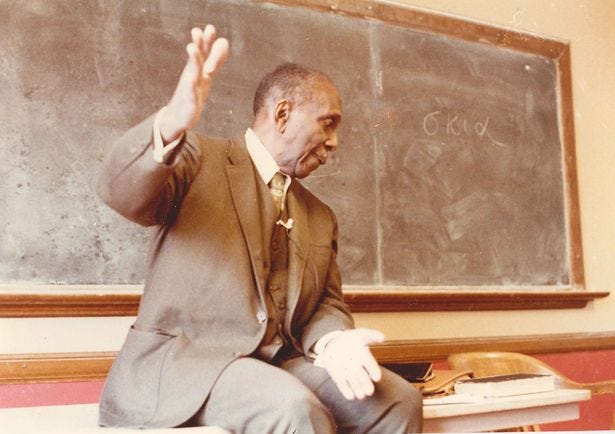
Nancy Ambrose had been enslaved. Her grandson, Howard Thurman, would spend his life developing what he heard in her voice: a Christianity that sided with “those who stand with their backs against the wall.”
On January 22, 2026, over a thousand clergy registered for a conference in Minneapolis. Organizers had expected two hundred. They called it MARCH — Multifaith Antiracism, Change and Healing. More than six hundred attended, from Presbyterian and Unitarian and Episcopal and Baptist traditions, deployed to neighborhoods where ICE was conducting raids.
That same week, David Easterwood held two roles.
On Sundays, He is a pastor of Cities Church in St. Paul — a congregation affiliated with Doug Wilson’s network that teaches empathy is sinful and manhood means being “willing to fight and inflict pain.”
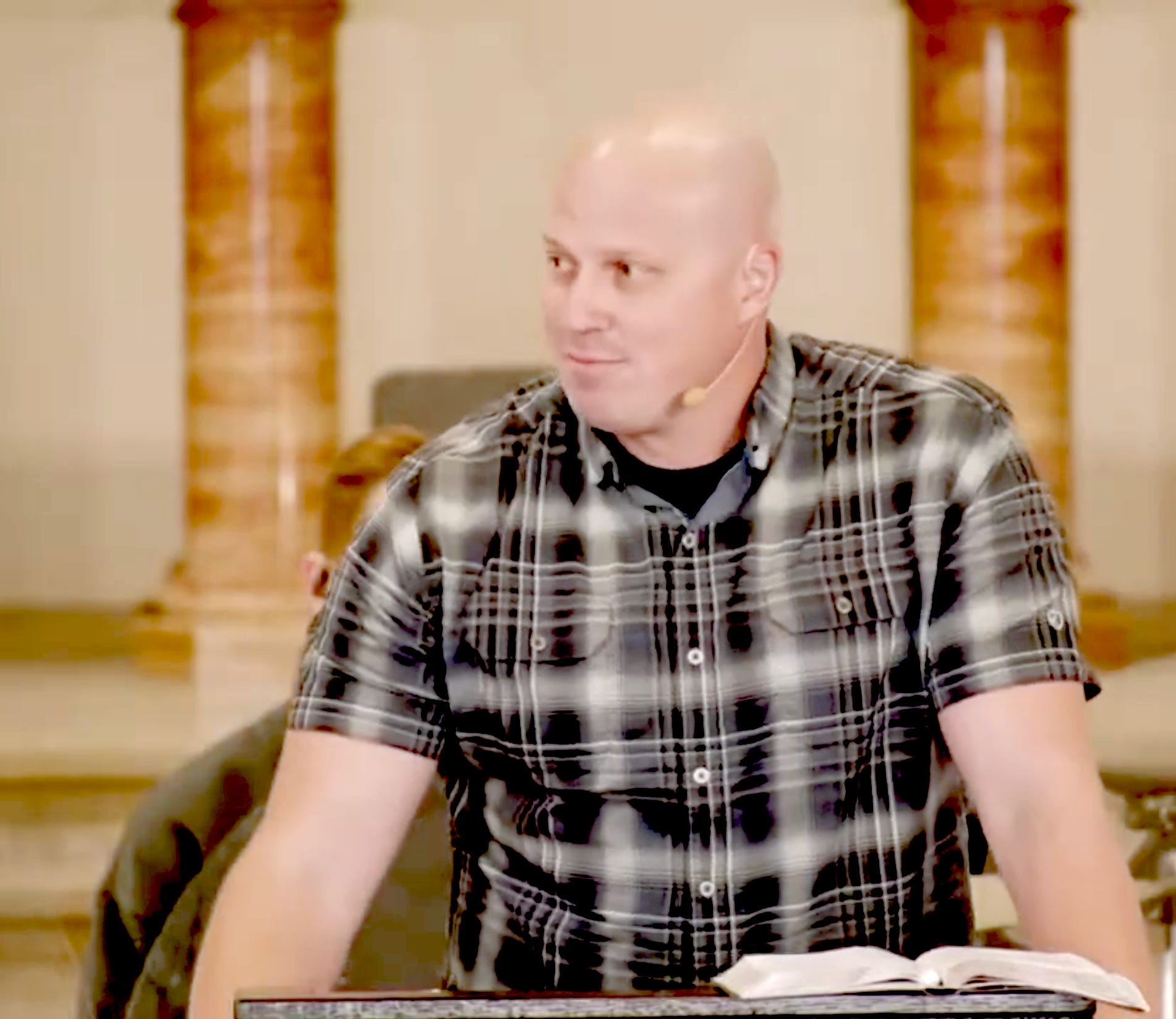
But on weekdays, Easterwood serves as the acting field office director for ICE’s St. Paul office. Where he is responsible for defending using chemical weapons against protesters, responsible for ignoring dozens of court orders, and responsible for operations that have resulted in the death of innocent civilians.
The Division
Frederick Douglass saw it in 1845.
In the appendix to his Narrative, he drew a distinction that would echo through American history:
“Between the Christianity of this land, and the Christianity of Christ, I recognize the widest possible difference... I love the pure, peaceable, and impartial Christianity of Christ: I therefore hate the corrupt, slaveholding, women-whipping, cradle-plundering, partial and hypocritical Christianity of this land.”
Douglass called slave-holding Christianity “a shelter to the most horrid crimes.”
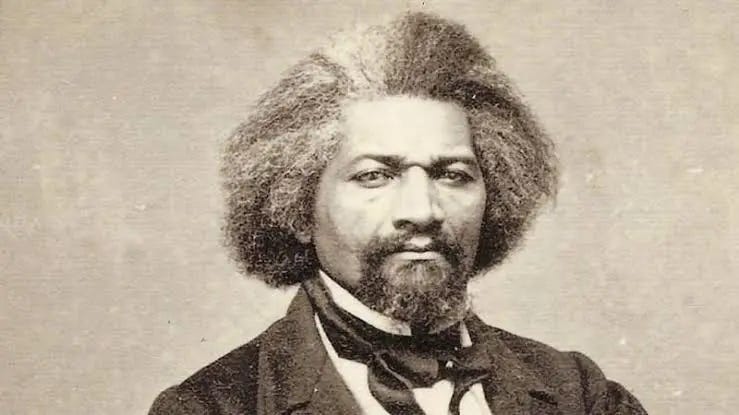
He was not arguing against Christianity. He was arguing that there were two of them.
The slaveholders had their theologians: Robert Lewis Dabney, who called slavery “the righteous, the best, yea, the only tolerable relation” for African people. The enslaved had their preachers too. They read the same Bible and found a different God.
Jesus and the Disinherited
Howard Thurman — Nancy Ambrose’s grandson — published the book in 1949.
Jesus and the Disinherited asked a simple question: What does Jesus say to those who have no power?
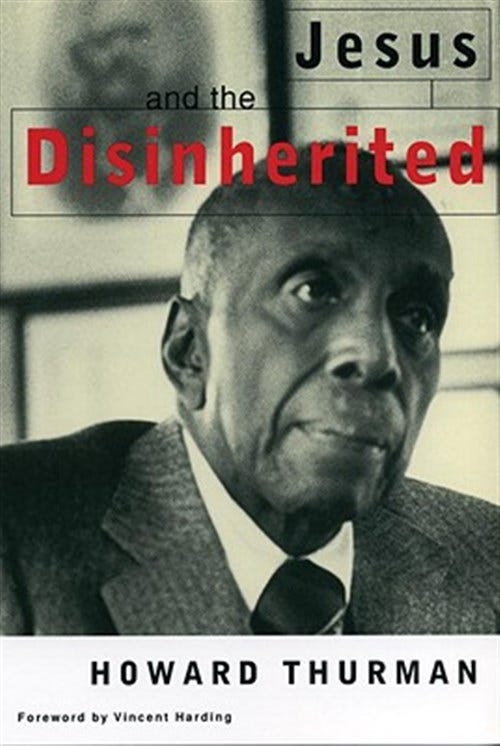
Thurman’s answer was radical: Jesus was one of them. Born in an occupied country. Part of a minority population. Under constant threat from the state. When Jesus spoke, he spoke from within the condition of the oppressed.
This Jesus wept at Lazarus’s tomb.
This Jesus touched lepers.
This Jesus said “whatever you did for one of the least of these, you did for me.”
Martin Luther King Jr. carried Jesus and the Disinherited during the Montgomery bus boycott. When Rosa Parks sat down on that bus, the theology was already in place.
Empathy as Sin
Doug Wilson teaches the opposite.
Wilson argues that Adam’s original sin was empathy:
“When Adam reached for the fruit, he was untethering himself from the sure word of God, and identifying himself completely with his wife and her outrageous behavior. He gave himself over to the sin of empathy, ate the fruit, and that is how the world went dark.”
Joe Rigney — Wilson’s disciple, founder of Cities Church — published The Sin of Empathy through Canon Press, arguing that empathy “often leads to cowardice” and “frequently leads to brazen malice and cruelty.”
Thurman’s Jesus wept at the tomb.
Wilson’s Jesus would have hardened his heart
to resist the temptation.
The contrast is the argument. If legitimate authority requires the “willingness to inflict pain” — as Wilson teaches — then empathy becomes an obstacle to godly governance. The overseer who felt what the enslaved person felt could not swing the whip.
The agent who felt what the detained family felt could not separate the children.
Two Churches, One City
When ICE agents raided Minneapolis’s immigrant communities in January 2026, faith leaders organized a response. They stood witness at detention centers. They documented what they saw. They opened their sanctuaries.
Federal agents responded by raiding churches.
On January 23, 2026, Nekima Levy Armstrong — a civil rights attorney, former Minneapolis NAACP president, and ordained minister — entered Cities Church to ask questions.
Why was the ICE director preaching about Jesus while his agents terrorized communities?
Within hours, the Department of Justice announced it was investigating the protesters — not ICE. Armstrong was charged under the FACE Act and Section 241, “conspiracy against rights.”
The asymmetry was the point: ICE raids immigrant-serving churches with impunity. A minister who enters an ICE director’s church to ask questions faces federal prosecution within hours.
The Clergy Response
They came from across the country.
The MARCH conference, held January 22-23 at Westminster Presbyterian Church, drew clergy from diverse traditions. Some had marched with John Lewis. Some had never been to a protest in their lives. They deployed to neighborhoods with significant immigrant populations, observing ICE enforcement operations.
On January 23 — the same day Armstrong was arrested at Cities Church — 100 clergy were arrested at Minneapolis-St. Paul International Airport. They had gathered outside Terminal 1 in minus-20-degree weather, praying and singing hymns, calling on airlines to oppose ICE’s surge in Minnesota. United Methodist Rev. Mariah Tollgaard and Rabbi Emma Kippley-Ogman were among those led away in handcuffs.
The protest was part of “A Day of Truth and Freedom” — a general strike that closed 700 businesses across the Twin Cities. Tens of thousands marched through downtown Minneapolis to Target Center.
They did it explicitly as Christians — and Jews, and Muslims, and Unitarians — claiming their traditions for their side.
On January 31, 154 Episcopal bishops — diocesan bishops, suffragans, and retirees from across the country — signed “A Letter to Our Fellow Americans.” The letter called for the suspension of ICE raids in Minnesota. It named Renee Good and Alex Pretti as victims of “state-sanctioned violence.”
For a denomination that moves deliberately, the letter was remarkable for its specificity.
The Pope Who Knew Chicago
Pope Leo XIV is the first American pope. Before his election in May 2025, Robert Prevost was a Chicago native who headed the Vatican’s Dicastery for Bishops — and before that, spent decades ministering in Peru.
He knows Chicago’s immigrant communities. He knows the parishes where families now hide.
In February 2026, Pope Leo XIV called for “deep reflection” on the treatment of migrants and asked for pastoral access to ICE detention facilities. Cardinal Blase Cupich of Chicago was more direct: he called the enforcement tactics “intolerable” and said they were designed to “terrorize.”
The first American pope was watching what American agents were doing to communities he knew.
Before Minneapolis, there was Chicago. Operation Midway Blitz — a precursor to the Minnesota raids — swept through neighborhoods that Prevost had served for years. The same theology that Wilson teaches as doctrine, the Vatican was condemning as cruelty.
The Battle Within
The theological battle was being fought within Christianity itself.
Russell Moore — former president of the Southern Baptist Convention’s Ethics & Religious Liberty Commission, now editor-in-chief of Christianity Today — called Wilson’s pro-slavery arguments “insidious” and “Satanic.” On Christianity Today’s podcast The Bulletin, Moore said Wilson represents “a denial of the gospel of Jesus Christ” and “the spirit of... antichrist.”
Moore was not speaking as a liberal critic. He was speaking as a conservative Baptist who recognizes what Wilson’s theology actually is.
Joe Rigney resigned as president of Bethlehem College and Seminary in April 2023 over what the school called “vision divergence.” The conflict involved his evolving views on infant baptism and church-state separation — a departure from the historic Baptist emphasis that John Piper’s institution maintained.
The Reformed Presbyterian Church in the United States declared Wilson’s Federal Vision theology “heretical” and said it “destroys the Reformed Faith.” The Orthodox Presbyterian Church and United Reformed Churches also rejected the movement.
These are not liberal denominations criticizing conservatives. These are Reformed and Baptist voices — Wilson’s own theological tradition — declaring his positions outside the bounds.
Two Jesuses
The divide is not between faith and secularism.
It is between two versions of Jesus.
One Jesus demands obedience to hierarchy. Authority requires the capacity to inflict pain. Empathy is sin. The strong rule; the weak submit.
The other Jesus weeps at the tomb. He touches the untouchable. He says the first shall be last. He warns that what you do to the least, you do to him.
One tradition runs from Dabney through Rushdoony through Wilson to Hegseth.
The other runs from the slaves’ secret services through Thurman through King to the clergy in Minneapolis.
Both claim the Bible. Both claim Christ.
One of them built the infrastructure that killed Renee Good — a 37-year-old poet, mother of three, whose last words were “That’s fine, dude. I’m not mad at you.” One of them trained the agents who shot Alex Pretti — a 37-year-old ICU nurse who stepped between an agent and a woman who’d been pushed to the ground, then was tackled, pepper-sprayed, and shot ten times in five seconds.
Martyria
The Greek word for witness is martyria.
From it, we get “martyr.”
The clergy in Minneapolis understood the connection. To bear witness is to put yourself in harm’s way. It is to stand where the vulnerable stand — not from a position of safety, but from alongside.
Renee Good’s last words — “That’s fine, dude. I’m not mad at you” — were martyria. Witness even in the moment of death.
Armstrong was arrested for martyria: for entering a church and asking questions.
The Choice
This is not abstract.
Cities Church is blocks from neighborhoods where federal agents deployed chemical weapons against American citizens.
The churches that sheltered immigrants were raided.
The clergy who stood witness were arrested.
And across town, a man absorbed the teaching that empathy is sin, then drove to the office where he directed the operations.
Douglass was right. There are two Christianities in America.
One of them believes authority requires the willingness to inflict pain.
The other believes Jesus wept.
Minneapolis is where they met.
The Question
The clergy who gathered did not come to debate theology.
They came because the theology was being implemented.
They came because when Howard Thurman asked “what does the religion of Jesus say to those with their backs against the wall,” the answer could not be silence.
They came because Dabney’s theology — extracted from the defense of slavery, transmitted through Rushdoony, merged with masculinity ideology by Wilson, and now installed in the War Department — was producing bodies.
They came to say: that is not our Jesus.
Their Jesus wept.
Related Coverage
The Pentagon Confirmed Hegseth Admires a Theologian Who Called Slavery ‘Benevolent’ — The theology of pain, from Dabney to Quantico
Tom Homan: The Commander — The 40-year mission and NatCon convergence with Wilson
The ICE Director Who Preaches on Sundays — David Easterwood, Cities Church, and the Wilson network
An Ordained Minister Was Arrested for Asking Questions in Church — Armstrong’s arrest and the federal prosecution
Here Am I, Send Me — DHS recruitment and the weaponization of Scripture
One of Ours, All of Yours — Collective punishment doctrine and Klan origins
The Woman in the Pink Jacket — Stella Carlson and the infrastructure of witness
Sources
Civil Rights Theology
Frederick Douglass, Narrative of the Life of Frederick Douglass (1845), Appendix
Howard Thurman, Jesus and the Disinherited (1949)
Howard Thurman, With Head and Heart: The Autobiography of Howard Thurman (1979)
MARCH Conference and Clergy Arrests (January 2026)
Religion News Service: “Hundreds of clergy descend on Minneapolis and go on lookout for ICE” (January 22, 2026)
National Catholic Reporter: “100 clergy arrested as thousands rally against immigration enforcement in subzero Minnesota temperatures” (January 23, 2026)
CBS Minnesota: “Clergy members arrested at MSP while protesting ICE in Minneapolis”
Twin Cities Pioneer Press: “Tens of thousands march in Minneapolis to protest ICE surge”
Presbyterian Outlook: “A murmuration of clergy: Presbyterians and partners gather in Minneapolis” (January 2026)
154 Episcopal Bishops Letter
Episcopal News Service: “154 Episcopal bishops issue message calling for immigration policies respecting the dignity of all” (February 2, 2026)
The Living Church: “154 Bishops Call for End to ICE Raids” (February 2026)
Wilson’s Theology
Doug Wilson, “Empathy, Effeminacy, and the Fall of Man” (Blog & Mablog)
Joe Rigney, The Sin of Empathy (Canon Press, 2024)
Cities Church teaching on “Masculine Agency” (Men’s Ministry curriculum)
PBS: “What to know about the archconservative church Defense Secretary Pete Hegseth attends” (August 2025)
Denominational Responses
Church Leaders: “Joe Rigney Resigns as President of Bethlehem Seminary Over Disagreements About Christian Nationalism, Believer’s Baptism” (April 2023)
Heidelberg Blog: “What The Confessional Reformed Churches Have Said About Doug Wilson”
Reformed Presbyterian Church in the United States (RPCUS) Covenant Presbytery declaration on Federal Vision
Russell Moore on Wilson
Church Leaders: “Russell Moore: Young Men Who Gravitate to Douglas Wilson ‘Become Losers’” — Moore on Christianity Today’s The Bulletin podcast calls Wilson’s arguments “insidious,” “Satanic,” “a denial of the gospel of Jesus Christ,” and “the spirit of... antichrist”
Pope Leo XIV and Catholic Response
NCR: “HABEMUS PAPAM: Leo XIV is 1st US pope chosen to lead Catholic Church” (May 8, 2025)
ABC7 Chicago: “Cardinal Blase Cupich calls Trump administration’s immigration tactics ‘intolerable’”
Vatican News: Pope Leo XIV calls for “deep reflection” on treatment of migrants
(February 2026)
Howard Thurman
The Howard Thurman Papers Project, Boston University
Boston University: “Who Was Howard Thurman?” (2020)
Howard Thurman, With Head and Heart: The Autobiography of Howard Thurman (1979)
This is Part 2 of a series on the theological networks behind federal enforcement policy. Part 1: Pete Hegseth’s Pastor Problem. For the full series, see The Gamergate Army Gets Badges and Guns.
Great article. Love that Frederick Douglass quote! My husband introduced me to Jesus (in my 40s) after a lifetime of serious mistrust of anything related to organized religion and I discovered how much there is to love and and respect about that guy. Not a fan of how people like Wilson twist his teachings into something ugly!
Thank you for a poignant, well-written piece. How I wish all of christendom could read your work! Keep up the good fight. I saw you on Pat Kahnke's YouTube podcast and loved what you had to say. God bless you!