

Border Patrol: A Criminal Organization Disguised as a Federal Agency
A former Border Patrol agent explains the culture that killed Alex Pretti
Jenn Budd calls Customs and Border Protection “a criminal organization disguised as a federal law enforcement agency.”
She earned the right to say it. She lived inside it.
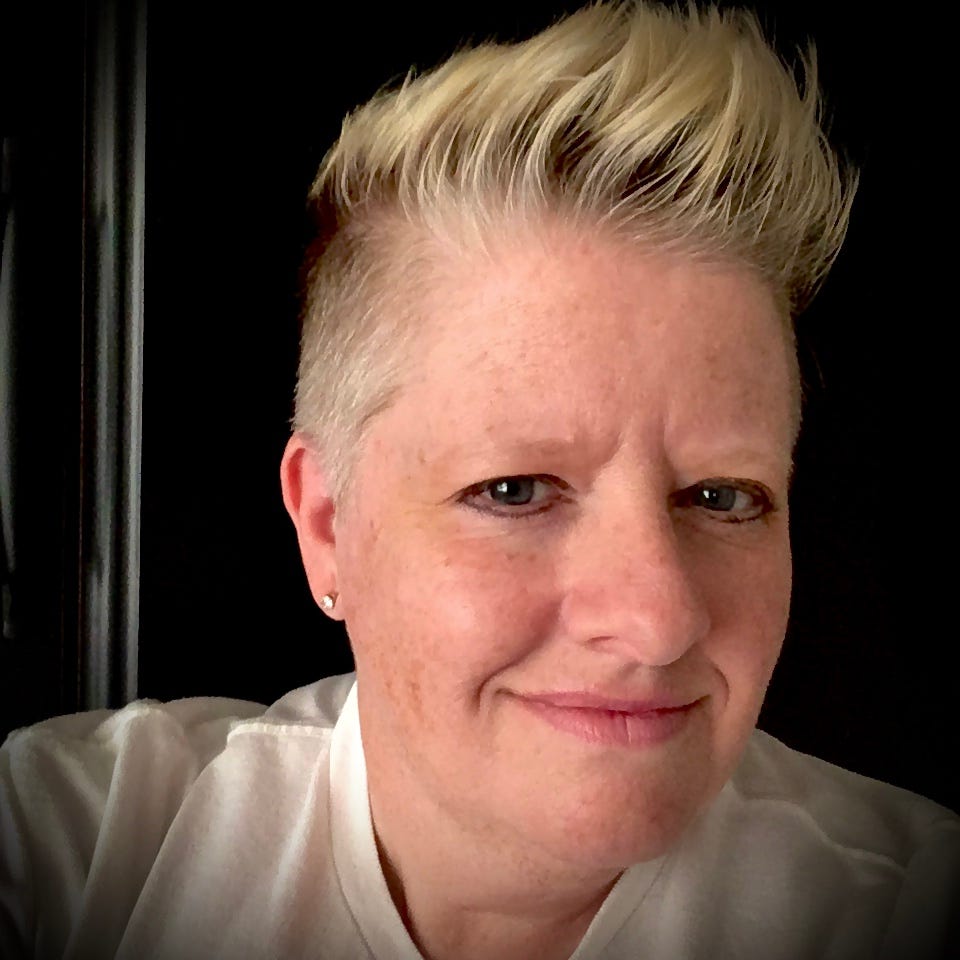
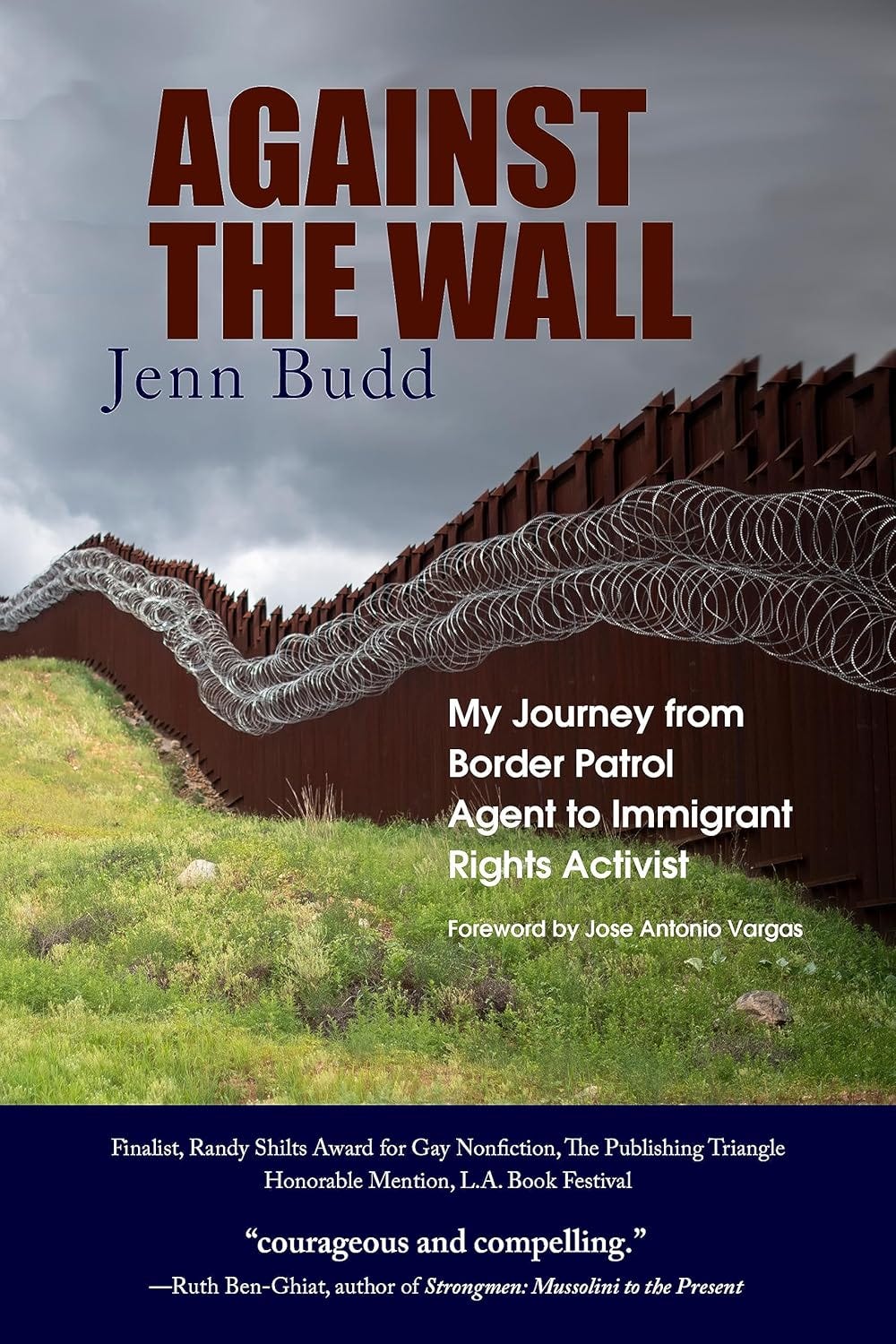
Budd served as a Senior Patrol Agent from 1995 to 2001. She survived the hazing, the misogyny, the rape culture, the retaliation. She wrote a memoir about it — Against the Wall: My Journey from Border Patrol Agent to Immigrant Rights Activist. She became the whistleblower the agency couldn’t silence and couldn’t discredit, because everything she described kept being confirmed by the evidence.
On January 24, 2026, Border Patrol agents Jesus “Jesse” Ochoa and Raymundo Gutierrez opened fire on Alex Pretti outside a Minneapolis courthouse. Pretti — a 37-year-old ICU nurse, a legal gun owner with a valid permit — had been helping a woman up off the ice when agents tackled him. They removed his handgun from his waistband. Then they shot him ten times.
Both shooters had CBP backgrounds. Ochoa had eight years of service. Gutierrez joined CBP in 2014 and was assigned to the Office of Field Operations SWAT team.
Journalist Garrett Graff, who has covered federal law enforcement for decades, noted it was “enormously relevant” that the agents in both Minneapolis shootings had CBP backgrounds — an agency that, as a 2013 Police Executive Research Forum review commissioned by CBP found, routinely saw agents firing weapons out of “frustration” rather than fear.
Budd wasn’t surprised. She knows what the academy produces.
The culture that killed Alex Pretti is 102 years old. Jenn Budd survived it and has been trying to tell us what it’s really like.
Founded by Klansmen
In 1924, Congress created the U.S. Border Patrol. The same year, the Immigration Act established the national origins quota system. Also that same year, the Second Ku Klux Klan reached its peak membership of several million.
This wasn’t coincidence. It was convergence.
The Border Patrol was founded during the peak of Lost Cause Christianity — the same period when Confederate monuments were being erected across the South, when segregation was being institutionalized as divine order, when the theology that had justified slavery was being transmitted to a new generation through churches, schools, and now, federal agencies.
The Lost Cause taught that the Confederacy was a righteous Christian civilization destroyed by godless Yankees. The Border Patrol became one of its institutional expressions — enforcing racial hierarchy at the nation’s edge with the same theology that had enforced it on the plantation.
The new agency recruited directly from the KKK and the Texas Rangers. “Practically every other member” of El Paso’s National Guard “was in the Klan,” one military officer recalled, “and many had joined the Border Patrol upon its establishment.”
The American Immigration Council’s comprehensive history documents the founding plainly: “Many officers came from organizations with a history of racial violence and brutality, including the Ku Klux Klan and the Texas Rangers, carrying over the culture of a racist ‘brotherhood’ into the new agency.”
The Texas Rangers brought a specific legacy. Between 1910 and 1920, the Rangers killed between 300 and 5,000 people of Mexican descent in what Mexicans called “La Matanza” — The Slaughter. In 1918, Rangers executed 15 unarmed Mexican American boys and men at Porvenir, separating them from their families and shooting them on a hillside. No evidence connected any of them to any crime. The remaining 140 villagers fled. The U.S. Army razed the village.
The Porvenir Massacre happened six years before the Border Patrol was founded. The Rangers who committed it — or their colleagues — fed directly into the new agency.
Then came Harlon Carter. At 17, in Laredo, Texas, Carter shot and killed 15-year-old Ramón Casiano — a Mexican teenager Carter believed might know something about a stolen car. Carter was convicted of murder. A higher court overturned the conviction on a technicality. Three years later, he joined the Border Patrol. By 1950, he was its chief.
From that position, Carter ran Operation Wetback — the most brutal mass deportation in American history. He told the Los Angeles Times he intended to deploy an “army of Border Patrol officers complete with jeeps, trucks, and seven aircraft” in what he called an “all out war to hurl Mexican wetbacks into Mexico.”
The agency’s founding chief was a teenager who killed a Mexican boy, rose through the ranks, and ran a deportation campaign named with a slur.
When Jenn Budd joined in 1995, this culture was already 71 years old.
What Budd Found Inside
“In the academy they mandate and they teach the agents to use racist terms for migrants so that they see these people as ‘others,’” Budd told an audience at the University of San Diego.
One term was “tonk” — named, agents told each other, for the sound made by slamming a flashlight over a migrant’s head.
This wasn’t dark humor. It was institutional design. Budd describes what she calls “pseudospeciation” — a systematic process of training agents to view migrants as another species entirely. Subhuman. Not deserving of the protections afforded to people.
Inside the agency, she encountered misogyny, rape culture, and institutional hostility toward LGBTQ agents. She discovered “cover up” teams — an institutional apparatus for hiding misconduct, built into the agency’s operational structure.
“It’s condoned,” Budd writes in Against the Wall. “When it happens and somebody complains... everybody groups together... they protect each other, and they push everything out and they stay quiet.”
This is the critical distinction Budd makes, the one that separates her account from standard police-misconduct narratives: the brutality isn’t a corruption of the training.
It IS the training.
The academy doesn’t produce good agents who occasionally go bad. It produces agents trained in dehumanization, protected by institutional silence, and rewarded for aggression. The ones who object are pushed out. The ones who comply are promoted.
Budd objected. She was pushed out. She’s spent the 25 years since she left trying to make people listen.
The Green Line of Silence
James Tomsheck served as the head of CBP’s internal affairs division. He saw the protection apparatus from the inside — and became another whistleblower.
“The Green Line of silence,” Tomsheck told investigators, “is higher and wider than it’s ever been.” CBP protects it’s own.
The statistics confirm him.
Between 2012 and 2015, CBP received 2,178 complaints of excessive force or other misconduct, according to ACLU analysis of agency data. The result: one resignation. Not one firing. Not one criminal conviction. One resignation.
In the entire history of CBP, zero agents have been convicted of criminal wrongdoing committed while on duty — despite deaths in custody, despite shootings, despite a pattern of violence documented across decades.
The numbers that do exist paint a picture of an agency that commits crimes at a rate incompatible with law enforcement. CBP employees commit crimes at five times the rate of other federal law enforcement officers, according to a Brennan Center analysis of arrest data. One CBP officer was arrested every 36 hours during the period studied. And the agency’s internal affairs capacity — 218 investigators for 60,000 employees — has no criminal investigation authority. They can refer. They can recommend. They cannot charge.
For agents who might consider speaking up, Budd has a warning born from experience: whistleblower retaliation, she told the ACLU, “would likely end their career.”
The brotherhood doesn’t just protect its own from outside accountability. It punishes anyone inside who threatens the silence.
“I’m 10-15” — The Brotherhood Digitized
In 2019, ProPublica exposed a secret Facebook group called “I’m 10-15” — Border Patrol code for “aliens in custody.” The group had 9,500 members.
The content was what Budd had been describing for two decades, now preserved in screenshots: jokes about dead migrants, including a 16-year-old boy who died in custody. Sexualized photoshopped images of a congresswoman. Casual discussion of letting people die.
But the revelation that mattered most wasn’t the content. It was the membership.
Border Patrol Chiefs Carla Provost and Ronald Scott were members. Leadership wasn’t unaware of the culture. Leadership was in the group.
CBP had known about the group since at least 2016 and taken minimal action. When Congress demanded answers after ProPublica’s reporting, the Trump administration obstructed oversight for a year.
Eventually, CBP investigated. The numbers tell the story of how the brotherhood processes accountability, according to House Oversight Committee Democrats:
135 investigations opened. 60 agents found to have committed misconduct. Two fired. Senior officials “negotiated deals to lessen discipline” for the rest. 57 agents — caught, on the record, posting racist content about the people they were charged with detaining — remained on the job.
Two out of 60. That’s not a failure of accountability. That’s accountability functioning exactly as the brotherhood designed it: absorb the scrutiny, sacrifice the minimum, protect the rest.
Budd’s reaction: this is what she’d been saying for 20 years.
The Expansion That Fed the Beast
After September 11, the U.S. government decided the answer to terrorism was the largest law enforcement expansion in American history.
Between 2006 and 2009, Border Patrol doubled its force — from 12,349 agents to 20,119. Congress appropriated billions. DHS hired as fast as it could process bodies.
To fill the ranks, the agency lowered its already-lowest hiring standards among federal law enforcement. Agents were deployed to the field before their background checks were completed. The nation’s largest law enforcement agency was built without an internal affairs capacity proportional to its size.
The consequences were predictable.
DHS’s own internal estimate placed the corruption rate at 5 to 20 percent. Between 2006 and 2016, agents accepted $11 million in documented bribes. Between 2005 and 2021, 238 CBP employees were arrested or indicted for corruption-related offenses.
ProPublica documented how a group from one Arizona outpost rose through the ranks together, retired, and left “corruption, misconduct and a toxic culture in their wake.” The article traced how personal networks within the agency replicated the brotherhood’s values at each level of promotion — the culture perpetuating itself through its own advancement pipeline.
Former Border Patrol Chief David Aguilar acknowledged the problem in congressional testimony but framed it as a hiring challenge. Former ICE Director John Sandweg, who served under Obama, was more direct: “When we rushed to hire Border Patrol agents, we ended up getting individuals who just weren’t well suited for some of the stressful encounters you have as a law enforcement agent. They resorted to force too quickly.”
The expansion didn’t dilute the brotherhood’s culture. It amplified it. Thousands of new agents were inducted into a system that trained dehumanization, rewarded silence, and punished accountability — now at twice the scale.
Replenishing the Brotherhood
In 2025, DHS launched a $100 million recruitment campaign — the largest law enforcement hiring push in modern American history. The target demographic: young men, 18-34, reached through geofenced ads at gun shows, UFC events, gaming venues, and military bases.
They weren’t creating a new culture. They were replenishing the old one.
ICE academy training was cut from approximately 16 weeks to as few as 47 days — a number that, according to three officials who spoke to The Atlantic, was chosen because Trump is the 47th president. Mandatory Spanish language training — essential for an agency that enforces immigration law — was eliminated entirely. NBC News documented that recruits were placed into training programs before completing the agency’s vetting process. More than 200 were dismissed during training; “just under 10” for criminal charges, failed drug tests, or safety concerns.
One recruit at the Brunswick, Georgia academy had previous charges of “strong-arm robbery and battery stemming from a domestic violence incident.”
Budd saw something the policy analysts missed: the ideological pipeline wasn’t just about hiring standards. It was about the churches.
“There are many Christian churches along the border who teach this type of extremist Christian ideology,” she wrote. “These churches cater to law enforcement, especially Border Patrol. They are xenophobic, Christian Nationalists who engage in men-only violent revivals that last for days. They preach that immigrants are invaders, and that immigration agents are heroes enforcing God’s will.”
On December 15, 2025, Border Patrol Commander Gregory Bovino posted a recruitment video featuring armed agents, an open Bible, and Isaiah 6:8 — “Here am I. Send me.” The soundtrack was Korn’s “Shoots and Ladders.”
Budd recognized it immediately. “Chief Bovino and his men believe they are preparing the United States for God. They believe they must be brutal and cruel — close their eyes and ears to the violence they bring. They must remove and even kill all those they deem as invaders, subhumans and non-Christians.”
Former acting ICE chief of staff Deborah Fleischaker warned that the recruitment ads “raise the specter that the agency will recruit white supremacists looking to carry out violence.”
The theological pipeline runs deeper than border churches. Doug Wilson — a pastor in Moscow, Idaho whose denomination, the CREC (160+ churches worldwide), counts Hegseth’s Nashville church among its congregations — has said publicly: “This is the first time we’ve had connections with as many people in national government as we do now.”
In Minneapolis, the acting ICE field office director David Easterwood preaches on Sundays at Cities Church, a Southern Baptist congregation — the man commanding deportation operations doubles as a pastor. The brotherhood now has both theological infrastructure and a $100 million recruitment budget.
Minneapolis — The Brotherhood Meets a City
The agents who killed Alex Pretti were deployed from south Texas to Minneapolis as part of “Operation Metro Surge” — 3,000 federal agents flooding a city of 430,000.
This is what it looks like when the brotherhood leaves the border.
The same culture that trained “tonk” as vocabulary, that joked about dead migrants in a 9,500-member Facebook group, that fired only two out of 60 agents caught posting racist content — that culture was now policing American neighborhoods, detaining American citizens, and operating without local oversight.
Minnesota’s Attorney General filed a federal lawsuit documenting that “ICE and CBP agents have indiscriminately arrested — without warrants or probable cause — Minnesotans solely because the agents perceived them to be Somali or Latino.” One ICE agent told a detained U.S. citizen: “I can hear you don’t have the same accent as me.”
In January 2026 alone, federal agents violated at least 96 court orders in Minneapolis — according to the chief federal judge in Minnesota. The Green Line of silence, nationalized.
Brooklyn Park Police Chief Mark Bruley said federal agents had racially profiled his own off-duty officers: “Every person who wears brown skin is a target.”
Tom Homan — the man commanding the Minneapolis operation — joined Border Patrol in 1984. He was inducted into the brotherhood 42 years ago. He rose through its ranks. Now he commands it, directing the culture he was formed by against American cities.
The brotherhood was designed for the border. It was designed for a place where agents could operate without cameras, without witnesses, where the people they brutalized had no legal standing and no political voice.
Now it’s been deployed against American communities. Communities with cameras. With lawyers. With constitutional rights.
Budd saw this coming. For years, she warned that the culture couldn’t be contained — that an agency trained in dehumanization would dehumanize anyone it was pointed at. The border was the training ground. The deployment was always going to be domestic.
On January 7, an ICE agent shot Renee Nicole Good through her windshield. On January 24, Border Patrol agents shot Alex Pretti. His phone was in one hand. His other palm was raised.
Two Americans killed in 17 days. Both called domestic terrorists before their bodies were cold. Both contradicted by video.
The brotherhood has arrived in American cities. It brought its rules with it.
The Question
Jenn Budd calls CBP “a criminal organization disguised as a federal law enforcement agency.”
The evidence supports her.
An agency founded by Klansmen and staffed by Texas Rangers who massacred unarmed civilians. An agency whose first chief killed a Mexican teenager and ran a deportation campaign named with a slur. An agency that received 2,178 misconduct complaints and produced one resignation. An agency whose members committed crimes at five times the rate of other law enforcement. An agency that caught 60 agents posting racist content about detainees and fired two.
Body cameras won’t fix a 102-year-old culture of Klan-origin impunity.
Incremental reform won’t fix an agency that investigated itself 135 times and found consequences twice.
Oversight boards won’t fix an agency whose internal affairs division has 218 investigators, no criminal authority, and a Green Line of silence that its own former chief of internal affairs calls wider than it’s ever been.
The question isn’t how to reform the brotherhood. It’s whether America is willing to dismantle it.
Right now, the answer is no. Right now, the brotherhood has a $100 million recruitment budget, a 47-day training pipeline, theological sanction from border churches, and operational command over American cities.
Right now, the brotherhood is drawing down in Minneapolis. But also likely gearing up for the next surge. And it’s recruiting.
Jenn Budd has been warning us for 25 years.
It’s time to listen.
Related Coverage
The Pentagon Confirmed Hegseth Admires a Theologian Who Called Slavery ‘Benevolent’ — The theology of pain, from Dabney to Quantico
Tom Homan: The Commander — The 40-year mission and the architect who replaced the hammer
BORTAC: America’s Interior Occupation Force — The tactical unit the brotherhood deploys, and the agents now identified
One of Ours, All of Yours — The collective punishment doctrine the brotherhood carries
Here Am I, Send Me — How DHS recruited an army using holy war and video game aesthetics
The Hammer: Gregory Bovino — The commander with the highest use-of-force ratio in Border Patrol
The Four Thresholds — The escalation framework from enforcement to occupation
Quantity Over Quality — Stephen Miller’s hiring surge and its consequences
Springfield: The Next Front — Where the brotherhood is heading next
Sources
Sources
CBP Origins and History
American Immigration Council, “The Legacy of Racism within the U.S. Border Patrol”
The Intercept, “The Border Patrol Has Been a Cult of Brutality Since 1924”
Kelly Lytle Hernandez, Migra! A History of the U.S. Border Patrol (University of California Press)
Jenn Budd
Against the Wall: My Journey from Border Patrol Agent to Immigrant Rights Activist (memoir)
Border Chronicle podcast interviews
University of San Diego campus talk
SOA Watch author presentation
Bluesky analysis of Bovino recruitment video (December 2025)
James Tomsheck
Congressional testimony on CBP internal affairs
Media interviews on the “Green Line of silence”
“I’m 10-15” Facebook Group
ProPublica, “Inside the Secret Border Patrol Facebook Group Where Agents Joke About Migrant Deaths and Post Sexist Memes” (2019)
ProPublica, follow-up reporting on discipline outcomes (2020)
House Oversight Committee Democrats, CBP Facebook Group Report (2021)
CNBC, reporting on final discipline statistics
CBP Accountability and Oversight
WOLA, “Fixing a Culture that Protects and Rewards Abuse at U.S. Border Agencies”
Brennan Center for Justice, “Hidden in Plain Sight: Racism, White Supremacy, and Far-Right Militancy in Law Enforcement”
Project on Government Oversight (POGO), CBP oversight reporting
Post-9/11 Expansion
ProPublica, “A Group of Agents Rose Through the Ranks to Lead the Border Patrol. They’re Leaving It in Crisis”
NPR, reporting on CBP corruption and dysfunction
New York Times, CBP bribery documentation ($11 million, 2006-2016)
Minneapolis Operations
Chief U.S. District Judge Patrick Schiltz, court order violation documentation (96 violations, January 2026)
Minnesota Attorney General, federal lawsuit on warrantless arrests and racial profiling
Brooklyn Park Police Chief Mark Bruley, statements on racial profiling of off-duty officers
Alex Pretti Shooting
Will Bunch, Philadelphia Inquirer, “The Toxic Culture That Killed Alex Pretti” (February 3, 2026)
ProPublica, identification of agents Ochoa and Gutierrez
NBC News, DHS internal review reporting
Washington Post, video analysis of the shooting
Current Recruitment
The Atlantic, reporting on 47-day training timeline
NBC News, reporting on vetting failures and recruit dismissals
NPR, DHS recruitment campaign documentation (October 2025)
PolitiFact, verification of training reduction claims
Next I am working on a series about the detention and deportation phases.
Less is known about what happens after they take you, but I think that story is important. Most of the violence we know about is in public. Which raises the question, What happens after they take you?
https://open.substack.com/pub/theramm/p/after-the-detention-part-1-autopsy
Great information. Thank you for all of your hard work.