

ElbowsUp: Beijing Watched America's Foreign Policy Get Sold to the Highest Bidder
A fictional account
A few days ago, President Donald Trump ordered the bombing of three Iranian nuclear facilities with bunker-buster bombs and Tomahawk missiles, calling it "a spectacular military success." The strikes prompted global alarm, with the UN Secretary-General calling them "a dangerous escalation in a region already on the edge."
But for those watching American foreign policy closely, this weekend's strikes represent something more troubling than military escalation—they appear to be the logical endpoint of a foreign policy that has been systematically purchased by foreign powers.
Just weeks ago, Saudi Arabia's defense minister warned Iran about potential Israeli strikes, while Gulf leaders privately urged Trump against military action during his recent visit. Yet Saudi Arabia's response has been notably restrained, calling for "de-escalation" while Gulf states that once might have cheered Iranian nuclear facilities being destroyed instead expressed "deep concern."
This measured response from America's key trading partners reflects a deeper understanding: they're watching a president whose foreign policy appears divorced from American strategic interests and instead aligned with whoever provides the largest financial commitments.
No one has had a better vantage point on this transformation than China's Ambassador to the United States during the 2025 constitutional crisis. His account reveals how fellow global powers have been forced to reckon with the reality that American foreign policy no longer serves American interests—it serves whoever is willing to pay the president the most.
You can also read my Analysis of the crisis or start at the beginning of the story.
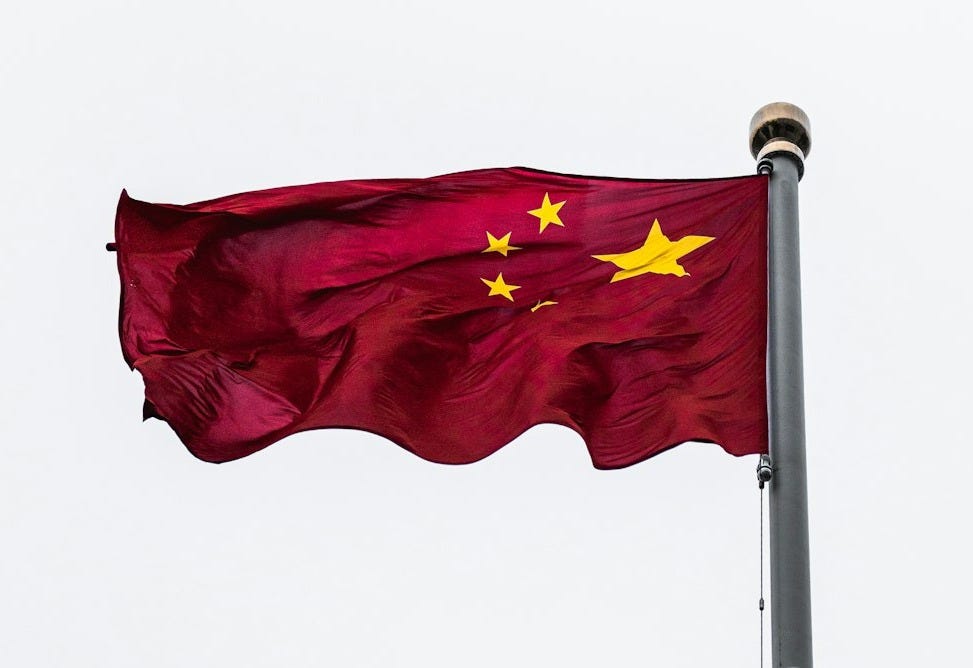
Ambassador Liu Wei
Chinese Ambassador to the United States (2023-2026)
Currently: Senior Fellow, Beijing Institute for International Studies
Interviewed: December 2, 2029
Location: Beijing, China
Interviewer: As Chinese Ambassador during the American constitutional crisis, you had a unique perspective on the North American reorganization. How did Beijing initially view the emerging crisis?
Ambassador Liu: In early 2025, our risk models indicated the global system was approaching a critical failure point. We were tracking three distinct but interconnected threats: the accelerating economic collapse of the Russian Federation on our border, escalating military conflicts in the Persian Gulf threatening our energy supply lines, and the alarming political capture of our primary economic rival, the United States.
For Beijing, this was not an abstract constitutional matter. It was a direct threat to Chinese economic security and regional stability. We were forced to plan for a world in which our most important trading partner had become dangerously unpredictable, while our largest neighbor faced potential state collapse around the world's largest nuclear arsenal.
Interviewer: When did you realize this was leading toward a fundamental realignment?
Ambassador Liu: The Saudi arrangement in January 2025 revealed the extent of institutional capture. When President Trump announced a $600 billion Saudi investment commitment and then immediately lifted Syria sanctions "at the crown prince's request"—his exact words, captured on video—we understood that American foreign policy was no longer serving American strategic interests.
This created an unacceptable risk for China. We could not conduct rational bilateral relations with a government whose decisions were determined by whoever provided the largest financial commitment. Our intelligence services reported that Canadian parliamentary committees were studying constitutional merger scenarios specifically designed to prevent such foreign capture. They were building institutions that could not be purchased.
Interviewer: How did the trade disruption affect Chinese strategic planning?
Ambassador Liu: The tariff escalation demonstrated the complete unpredictability of captured governance. In February 2025, Trump imposed emergency tariffs starting at 10%, allegedly about fentanyl interdiction. By April, this had escalated to 145% tariffs—effectively terminating $500 billion in annual bilateral commerce overnight.
China was forced to implement retaliatory measures reaching 147% on American imports. This was not policy—this was economic warfare triggered by internal American political dynamics rather than strategic calculation. Even after the Geneva stabilization agreement reduced tariffs to 30% in May, we faced historically unprecedented levels that made five-year economic planning impossible.
No major power can sustain development partnerships with a government that can impose 145% tariffs on Monday, initiate military strikes against your energy partners on Tuesday, and demand your cooperation on Wednesday. We needed stable, predictable relationships based on institutional frameworks rather than personal business arrangements.
Interviewer: What about the Iranian strikes and energy security concerns?
Ambassador Liu: The June military action against Iranian nuclear facilities represented our worst-case scenario materializing. China imports approximately 90% of Iran's oil exports through strategic partnerships developed over decades. When the United States initiated military strikes against a key energy partner weeks after securing Saudi business commitments, we were witnessing foreign-purchased military policy directly threatening Chinese energy security.
Secretary Rubio's subsequent demand that Beijing pressure Iran over Strait of Hormuz navigation was particularly revealing. He was demanding China choose between our energy security and American requests—but these were not requests based on American strategic interests. These were demands from an administration that had just received $600 billion from Saudi Arabia, Iran's primary regional rival.
This demonstrated that American military power was being deployed to serve foreign financial interests rather than coherent strategic objectives. For China, this represented an unacceptable level of systemic risk.
Interviewer: How did Russian instability complicate your calculations?
Ambassador Liu: Simultaneously, our intelligence indicated that Russian economic collapse was accelerating beyond even pessimistic projections. Putin had systematically eliminated potential successors, creating what our analysts termed "authoritarian succession vacuum" around the world's largest nuclear arsenal.
Russia's central bank interest rates reached 21%, their National Welfare Fund was depleting rapidly, and our Moscow embassy reported increasing elite instability. This presented both opportunity and existential threat for China. A weakened Russia becomes more dependent on Chinese economic support, which serves our strategic interests. However, a fragmenting state with 6,000 nuclear warheads on our border represents an unacceptable security risk.
The international system was becoming fundamentally ungovernable. We needed partners capable of institutional stability rather than personal rule.
Interviewer: When did Chinese recognition of the USC become strategically necessary?
Ambassador Liu: When trade relations collapsed under the 145% tariff regime in April 2025, we realized we required economic partners whose policies could not be purchased and whose trade relationships would not be destroyed by individual business interests or social media announcements.
Our analysis of the emerging USC constitutional framework revealed institutional continuity that the federal government could no longer provide. Constitutional constraints on emergency economic measures, explicit prohibitions on foreign business arrangements by officials, and legislative oversight of trade policy—structural protections that the captured presidency had abandoned.
Most importantly, we observed leaders who had chosen institutional principles over personal financial gain. Governor Newsom faced federal arrest rather than compromise state sovereignty. Military officers refused deployment orders that violated constitutional law. These were officials we could negotiate with reliably because their institutions prevented arbitrary policy reversals based on foreign payments.
Interviewer: How did this affect your family during the crisis?
Ambassador Liu: My daughter Mei-Lin was completing her physics doctorate at Stanford during the crisis. She called me after the Iran strikes, asking: "Baba, why is America attacking our energy partner to help Saudi Arabia?" I realized I could no longer explain American policy using rational strategic analysis.
When she chose to remain in the USC rather than return to China, it was primarily a professional decision. The research facilities, laboratory funding, and academic collaboration opportunities in the USC were simply unparalleled. She is a pragmatist who chose the system that offered the best environment for her scientific work. The political stability was a secondary consideration, though she certainly appreciated having predictable institutional frameworks rather than policy chaos.
Interviewer: How did Beijing manage the diplomatic transition?
Ambassador Liu: We maintained formal diplomatic relations with Washington throughout—diplomatically necessary given existing treaty obligations. However, we accelerated substantive policy engagement with USC leadership. By summer 2025, we were conducting more productive bilateral discussions with Sacramento and Ottawa than with Washington.
The federal government was preoccupied with managing Saudi business relationships, defending against foreign emoluments litigation, and implementing economically destructive tariffs that required constant crisis management. The 145% tariff regime effectively terminated Chinese-American trade for two months, forcing us to develop alternative commercial relationships for $500 billion in annual commerce virtually overnight.
Meanwhile, USC leadership demonstrated focus on institutional governance, constitutional frameworks, and stable long-term partnerships. They offered predictable trade relationships based on legal structures rather than individual business interests or social media announcements.
Interviewer: What convinced Beijing to formally recognize the USC?
Ambassador Liu: President Xi received comprehensive briefings indicating we would be engaging with a North American federation combining Canadian institutional stability with American innovation capacity—crucially protected by constitutional frameworks preventing the foreign capture that had compromised federal governance.
The USC Constitution included explicit institutional protections we had never observed: mandatory legislative approval for foreign business arrangements by officials, automatic divestiture requirements for conflicts of interest, and constitutional prohibitions on emergency trade measures without legislative oversight. These were not theoretical protections—they were direct institutional responses to the governmental capture we had witnessed.
China was among the first major powers to extend recognition to the United States of Canada. The decision was strategically necessary. We required stable partners for global challenges—climate cooperation, technological coordination, economic development—that could not be disrupted by whoever was willing to provide the largest payments.
Interviewer: How has this transformed global power dynamics from China's perspective?
Ambassador Liu: The USC's institutional success demonstrated that federal systems could adapt to prevent foreign capture rather than simply defending compromised structures. This was not ideological validation—it was practical demonstration that constitutional frameworks could provide the stability necessary for reliable international partnerships.
Iran's retaliation for the nuclear strikes focused on American military installations in Qatar rather than energy infrastructure, which partially stabilized our immediate supply concerns. However, the broader pattern remained: a captured presidency making military decisions based on foreign business relationships rather than coherent strategic assessment.
Other regions are studying USC institutional innovations for their practical applications. The European Union has implemented ranked-choice voting experiments. Japan is examining their consensus-building mechanisms. The USC created a template for institutional stability, not ideological transformation.
Interviewer: Any miscalculations in Chinese policy during the crisis?
Ambassador Liu: We underestimated the organizational capacity of American civil society. Our models predicted either chaotic collapse or protracted internal conflict. The speed of constitutional innovation—from institutional crisis to functioning federation in eighteen months—exceeded our most optimistic projections for Western democratic adaptation.
We should have recognized the USC earlier. Every month of delay provided more legitimacy to a government that had been purchased by foreign powers. Stable institutions deserve support from major powers, particularly when they demonstrate superior predictability compared to captured alternatives.
Interviewer: What's your assessment of the USC's strategic trajectory?
Ambassador Liu: The USC represents effective institutional governance for contemporary challenges. Not because they achieved ideological perfection, but because they established frameworks for stable decision-making that cannot be disrupted by foreign purchase or individual business interests.
The integration has proceeded faster than our strategic planning anticipated. Provincial and state governments have achieved coordination on infrastructure development, environmental policy, and economic frameworks. The dual capital system provides both parliamentary efficiency and federal representation.
Quebec's autonomous status within the USC rather than independence represents a sophisticated solution to regional diversity within federal structures. This arrangement appears sustainable and could provide models for other federal systems managing internal diversity.
My daughter now works in USC scientific cooperation programs, helping coordinate research partnerships that China participates in. She represents a generation that views the USC not as American replacement, but as institutional evolution toward more stable governance frameworks.
Interviewer: Looking back, how do you view your role during this transformation?
Ambassador Liu: I observed the emergence of the first constitutional system explicitly designed to prevent foreign capture of democratic institutions. This was not about ideological preference—it was about institutional effectiveness under contemporary conditions.
China studies the USC model because it demonstrates that federal systems can adapt to new challenges rather than simply defending traditional arrangements. The USC preserved functional governance capabilities while eliminating the vulnerabilities that destroyed the predecessor system.
This was not American failure—it was institutional evolution. The USC created frameworks capable of protecting state sovereignty from the threats that compromised the original system. From China's perspective, this provided the stability necessary for productive international cooperation.
The world benefits from having reliable partners capable of consistent policy implementation rather than governance subject to foreign purchase or individual business arrangements.
Ambassador Liu continues to serve as senior advisor on China-USC relations and has written extensively on institutional adaptation under pressure. His analysis of federal system stability is considered essential reading for understanding contemporary geopolitical partnerships.
We have explored legal battles, conscious refusal to follow orders, mass protest, and why people go along. Now we have the international community reaction.
This is so helpful and we'll researched. Thanks!