

5 Million Americans Said 'No Kings': The Largest Protest in U.S. History
Part 3 of "The 2025 Constitutional Crisis" series
On June 14, 2025—Trump's 79th birthday—something unprecedented happened. Across 2,100+ locations in all 50 states, over 5 million Americans simultaneously declared: "We don't do kings." It may have been the largest single-day protest in American history.¹
The timing wasn't coincidental. As Trump staged a $45 million military parade through Washington D.C.—complete with tanks, helicopters, and thousands of soldiers—millions of Americans took to the streets in the largest display of democratic resistance the nation has ever seen.²
The message was unmistakable: While Trump celebrated his power with displays typically seen in authoritarian regimes, the American people showed him exactly what real power looks like in a democracy.
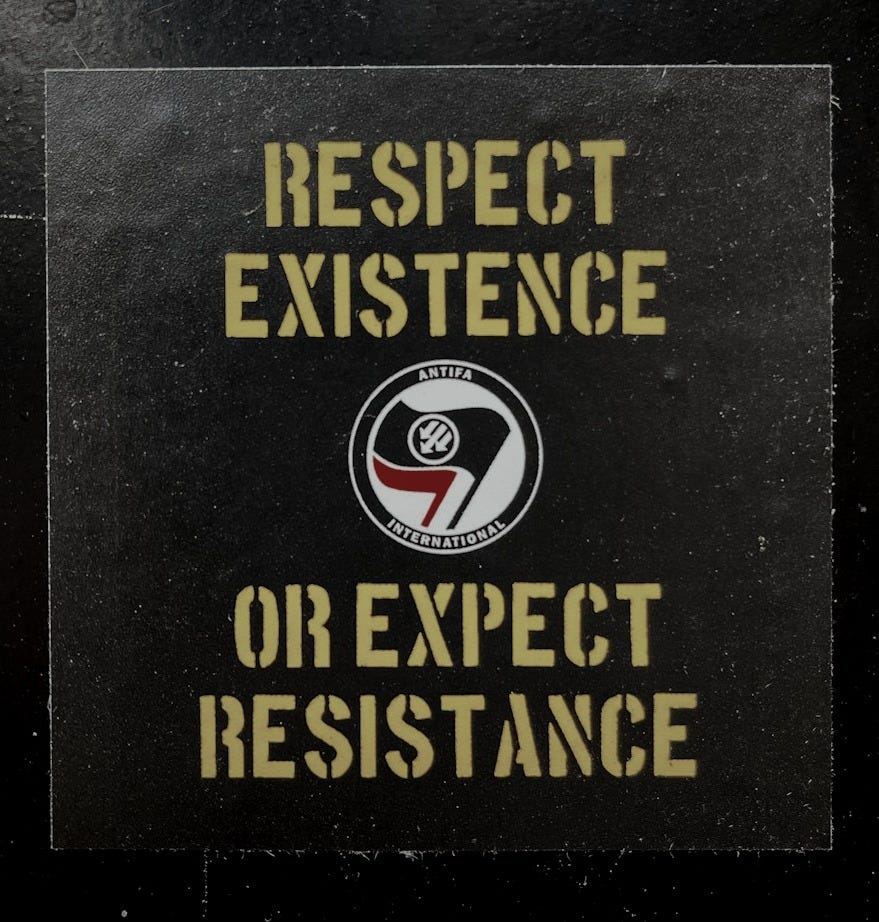
The Perfect Storm: Why June 14 Exploded
The "No Kings" protests didn't emerge from nowhere. They were the culmination of mounting resistance to Trump's increasingly authoritarian actions throughout his first months back in office.
By June 2025, Americans had witnessed:
The $600 billion Saudi corruption scandal and explicit foreign policy quid pro quo
Trump's unprecedented seizure of California's National Guard over the governor's objections
Massive ICE raids conducted with military-style tactics
The deployment of federal troops against American citizens on American soil
But the immediate catalyst was Trump's decision to stage a military parade on his own birthday. The optics were unmistakable: a president using the U.S. military as props for a personal celebration, borrowing directly from the authoritarian playbook.³
"This is exactly what Putin does, what Xi does," said Indivisible co-founder Ezra Levin. "Military parades are not an American tradition—they're a dictator tradition."⁴
The "No Kings" coalition—comprising over 200 organizations including MoveOn, ACLU, American Federation of Teachers, and Communications Workers of America—saw June 14 as the perfect moment to draw a clear contrast.⁵ While Trump paraded tanks through D.C., Americans would flood the streets everywhere else.
The Scale: How 5+ Million Was Verified
Counting dispersed protests across 2,100+ locations presents obvious challenges. But multiple independent analyses converged on the same stunning conclusion: over 5 million Americans participated in "No Kings Day," making it potentially the largest single-day protest in U.S. history.
Data Journalist Methodology
Data journalist G. Elliott Morris undertook the most comprehensive count, collecting reported crowd sizes from hundreds of cities through local media and official sources. For locations without published estimates, Morris used statistical imputation—assigning each unreported protest the median attendance of similar reported events.⁶
This methodology avoided inflating estimates due to a few massive rallies in major cities. By using median rather than average attendance, Morris's team created a conservative estimate that accounted for the thousands of smaller gatherings across rural America.
Morris's analysis concluded: "Back-of-the-envelope math puts total attendance somewhere in the 4–6 million people range. That means roughly 1.2–1.8% of the U.S. population attended a No Kings Day event somewhere in the country."⁷
Organizer Counts
The No Kings Coalition independently compiled turnout reports from their local chapters. By afternoon on June 14, organizers estimated approximately 5 million attendees across all events.⁸ Their city-specific figures included:
200,000 in Los Angeles
100,000 in Philadelphia
70,000 in Seattle
Over 50,000 in New York City⁹
With hundreds of other rallies drawing thousands each—from Atlanta's 5,000-capacity event that quickly reached its limit to the thousands who gathered in places like Dallas, Austin, and Denver—the 5 million figure appears well-supported.¹⁰
Academic Verification
The Crowd Counting Consortium, led by scholars like Jeremy Pressman, was also monitoring turnout. While they noted it would take time to finalize an "official" count, Pressman acknowledged to USA Today that the protests were "among the largest single-day protests" in U.S. history and suggested the numbers were in the same ballpark as previous massive demonstrations.¹¹
Historical Context: How 5 Million Compares
To understand the magnitude of "No Kings Day," we must place it in historical context. The 5+ million participant count rivals or exceeds every major protest movement in American history:
The 2017 Women's March: The Previous Record Holder
Prior to "No Kings," the January 21, 2017 Women's March held the record for largest U.S. single-day protest. Studies estimated between 3.3 and 5.6 million participants nationally—commonly cited as about 4 million.¹² The "No Kings" protests appear to match or slightly exceed the Women's March at its peak.
Dwarfing the Tea Party
The contrast with conservative mobilization is stark. The largest Tea Party gathering was the September 12, 2009 "Taxpayer March on Washington." While organizers claimed 600,000 to 1 million attendees, credible sources put the D.C. rally at 60,000-75,000.¹³ Even aggregating multiple Tea Party events across the country, total turnout likely stayed in the low hundreds of thousands.
"No Kings Day" had easily 10 times the participation of the Tea Party's largest mobilizations—a stunning demonstration of the difference between grassroots organizing and astroturf activism.
Civil Rights Era Comparisons
Even the most iconic civil rights demonstrations pale in comparison to "No Kings" in sheer numbers:
The 1963 March on Washington drew about 250,000 people¹⁴
The 1969 Vietnam War Moratorium protests involved an estimated 2 million people nationwide¹⁵
The largest sustained movement, 2020's Black Lives Matter protests, saw 15-26 million Americans participate over several weeks—but no single day approached 5 million¹⁶
The Earth Day Exception
Only Earth Day 1970 potentially rivals "No Kings Day" for single-day participation. Environmental demonstrations on April 22, 1970 saw an estimated 20 million Americans participate in teach-ins and rallies—representing about 10% of the U.S. population.¹⁷
However, Earth Day was fundamentally different: a largely educational event spanning schools and communities rather than a contentious political protest. The comparison highlights just how extraordinary 5 million protesters in a single day truly is.
The Geographic Breadth: Red States and Blue States United
What made "No Kings Day" historically significant wasn't just the numbers—it was the geographic distribution. The protests weren't concentrated in liberal coastal cities but spread across all 50 states, including deep red America.
Red State Resistance
Even in Trump strongholds, Americans turned out in remarkable numbers:
Alabama: Despite organizers receiving threats, an estimated 2,000 gathered in Mobile, with additional rallies in Montgomery, Birmingham, Huntsville, and six other cities¹⁸
Texas: Thousands protested at the state capitol in Austin despite a "credible threat" against legislators, while Dallas saw thousands more march downtown¹⁹
Arizona: Despite 106-degree heat in Green Valley, hundreds turned out. "I just find the disregard for the U.S. Constitution to be unacceptable," said retired school teacher Martha Jane Gipson²⁰
Small Town America Speaks
The protests weren't limited to major cities. Demonstrations occurred in places like:
Culpeper, Virginia (where a man was arrested for driving through protesters)
Sitka, Alaska (300 people)
Homer, Alaska (600 people)
Scottsboro, Alabama
Fort Payne, Alabama²¹
This geographic breadth demonstrated that resistance to Trump's authoritarianism transcended traditional partisan divisions. When Americans from Fairbanks to Mobile rise up simultaneously, it signals something deeper than typical political opposition.
International Solidarity
The resistance wasn't limited to American soil. "No Kings" protests (rebranded as "No Tyrants" or "No Dictators" to avoid confusion with anti-monarchist movements) occurred across the globe:
United Kingdom: "No Tyrants" and "No Clowns" protests in London drew hundreds, with additional demonstrations in Edinburgh²²
Sweden: Protests in Stockholm, Umeå, and Malmö organized by Democrats Abroad²³
Switzerland: Demonstrations in Geneva and Zurich under the "No Kings" banner²⁴
Germany and France: Additional solidarity protests organized by American expatriates²⁵
The international dimension underscored how Trump's authoritarianism was seen as a global threat to democratic values.
The Contrast: Trump's Failed Spectacle
While millions protested across America, Trump's $45 million military parade in Washington D.C. was drawing criticism for poor attendance and inappropriate militarization of American democracy.
The Army had expected the parade to attract 200,000 people, but aerial photographs suggested significantly lower turnout.²⁶ The optics were telling: Trump celebrating himself with tanks and missiles while millions of Americans declared their opposition to his rule.
The parade itself sparked controversy for politicizing the military. As one military historian noted, "Military parades are typically associated with authoritarian regimes seeking to project power and intimidate opposition. They're fundamentally anti-democratic."
The Organizing Infrastructure: 200+ Organizations
The scale of "No Kings Day" was possible because of sophisticated organizing infrastructure built over Trump's first term and refined during his exile from power. The coalition included:
Established Groups: MoveOn, ACLU, American Federation of Teachers, Communications Workers of America
Grassroots Networks: Indivisible chapters in thousands of communities
Issue-Specific Organizations: Immigration advocacy groups, reproductive rights organizations, environmental groups
Local Community Groups: Hundreds of hometown organizations that could mobilize neighbors and friends²⁷
This wasn't a spontaneous uprising—it was the product of years of careful organizing and relationship-building that allowed rapid mobilization when the moment demanded it.
The Message: Democracy vs. Authoritarianism
"No Kings Day" sent a clear message that transcended traditional partisan politics. As the movement's website declared: "The flag doesn't belong to President Trump. It belongs to us. On June 14th, we're showing up everywhere he isn't—to say no thrones, no crowns, no kings."²⁸
Protesters weren't just opposing specific policies—they were defending the fundamental principle that in America, no one is above the law. Signs reading "We Don't Do Kings," "Democracy Not Dictatorship," and "No American Monarchy" appeared from coast to coast.²⁹
The timing on Trump's birthday was deliberate psychological warfare. While Trump celebrated himself, Americans celebrated democracy. While he paraded military hardware, they paraded democratic values.
The Impact: Precedent for Resistance
"No Kings Day" accomplished several crucial goals for the democratic resistance:
Demonstrating Scale
The 5+ million turnout proved that opposition to Trump's authoritarianism wasn't limited to political elites or coastal liberals—it was a mass movement spanning the entire country.
Building Confidence
Seeing millions of fellow Americans in the streets gave participants confidence that they weren't alone. As one protester in Atlanta noted: "I thought I was the only one who felt this way. Now I know we're everywhere."³
Setting Precedent
The successful mobilization created a template for future mass resistance. Organizers proved they could coordinate simultaneous protests across 2,100+ locations—a capability that could be rapidly deployed as constitutional crises escalated.
International Signal
The global nature of the protests sent a message to international allies that Trump didn't speak for the American people. Millions of Americans actively opposed his authoritarian turn.
The Aftermath: What 5 Million People Set in Motion
"No Kings Day" wasn't just a one-day event—it was a turning point that catalyzed ongoing resistance efforts. In the days following June 14:
Boycott campaigns against Trump-affiliated businesses gained momentum
Voter registration drives in protest locations saw massive upticks
Local organizing chapters reported surges in membership and volunteer sign-ups
International media coverage highlighted American democratic resistance
Perhaps most importantly, the protests laid groundwork for the "1 Million Rising" campaign—an effort to train one million Americans as pro-democracy organizers.³¹ The massive turnout on June 14 proved that Americans were ready to be mobilized for sustained resistance.
Why This Matters for American Democracy
The "No Kings" protests represent more than impressive crowd counts—they demonstrate the enduring strength of American democratic values even under authoritarian pressure.
When 5+ million Americans simultaneously declare their opposition to autocracy, it sends a powerful message to both domestic authoritarians and international observers: American democracy has deep roots that won't be easily uprooted.
The protests also revealed the organizing capacity of the democratic resistance. The ability to coordinate simultaneous actions across 2,100+ locations represents sophisticated political infrastructure that authoritarians should fear.
Most importantly, "No Kings Day" proved that Americans understand what's at stake. The constitutional crisis isn't an abstract legal debate—it's a fight for the soul of American democracy, and millions are ready to fight for it.
What Comes Next
The massive turnout on "No Kings Day" demonstrated unprecedented democratic resistance, but it also highlighted a troubling reality: traditional peaceful protest, even at historic scale, might not be sufficient to stop constitutional breakdown.
As millions marched in the streets, the very institutions designed to check presidential power were failing in real time. Congressional oversight was proving toothless. Courts were deferring to executive authority. The constitutional safeguards the Framers designed to prevent tyranny were crumbling under partisan pressure and legal technicalities.
Next in this series: "When Constitutional Checks Fail: Why Congress Can't Stop Trump"—how the largest protest in American history couldn't overcome the systematic breakdown of institutional accountability.
Sources
Anti-Trump No Kings protests flood American streets ahead of military parade
Anti-Trump No Kings protests flood American streets ahead of military parade
Ibid.
"No Kings" anti-Trump protests attract millions, organizers say
Ibid.
"No Kings" protests draw crowds in cities across U.S. - CBS News
Ibid.
Ibid.
Ibid.
Ibid.
Ibid.
Ibid.
"No Kings" protests draw crowds in cities across U.S. - CBS News
Anti-Trump No Kings protests flood American streets ahead of military parade
Ibid.
Ibid.
Ibid.
Demonstrators rally against Trump at 'No Kings' protests | AP News
Anti-Trump No Kings protests flood American streets ahead of military parade
Anti-Trump No Kings protests flood American streets ahead of military parade
Photos: See No Kings protests around the country : The Picture Show : NPR
Have we witnessed the largest expression of democratic resistance in American history? What does it mean when 5 million Americans simultaneously reject authoritarianism? Share your thoughts in the comments, and subscribe to follow this investigation as it unfolds.
Elbows up!